
 |
|
 |
|
 |
|
 |
|
 |
|

|
|
|
|
|
Now try to persuade us you're not a Nazi!
UK's Bilderberger in chief Kenneth Clarke, now Justice Secretary and Lord
Chancellor
Justice secretary to end enforced idleness in jails with some of cash earned
going to victims
Are we supposed to be grateful it's not going to the SS Ken?
What is even more shocking is that so few voices are raised in oppisition
to this.
How soon we forget.
Tony
http://www.facebook.com/profile.php?id=1274106225
(AFP) – Wednesday 6th October 2010
LONDON — Prisoners should work a 40-hour week, with the proceeds going towards compensating victims and paying for offenders' time behind bars, Justice Secretary Ken Clarke said on Tuesday.
Private businesses will be brought into jails to provide nine-to-five jobs and training for inmates, in an effort to reduce re-offending, Clarke said.
"We need to instil in our prisons a regime of hard work," Clarke told his Conservative Party conference in Birmingham.
"Most prisoners lead a life of enforced, bored idleness, where even getting out of bed is optional."
Prisoners could get the minimum wage of £5.60 an hour under the reform proposals but part of their earnings would go into a fund for victims and some will be ploughed back into the prison system.
"We have to try to get those people who have the backbone to go straight -- to handle a life without crime when they have finished their punishment," Clarke said in a bullish speech met by cheers from delegates.
"So we will make it easier for prison governors to bring more private companies into their jails to create well-run businesses, employing prisoners in regular nine-to-five jobs."
Schemes similar to one launched last month in Peterborough -- which attracted five million pounds of private sector investment -- will be rolled out across the country in the new year, he pledged.
Clarke, who has come under fire in recent months for saying the number of minor offenders being sent to prison should be reduced, stressed that he was not in favour of "molly-coddling" prisoners.
He introduced measures to crack down on drug use in prisons, including new "drug free wings".
The veteran Conservative said he believed prison was the best place for "serious criminals" but that alternatives to jail sentences were "not tough enough".
A sentencing review will be published in a Green Paper later this autumn.
Criminal justice campaigners welcomed Clarke's plans [! ed.], but said jobs for prisoners needed to be relevant to the real job market.
Graham Beech, strategic director of crime reduction charity Nacro, said: "Employment is one of the most effective ways of reducing re-offending, and equipping prisoners with the skills to get jobs on release will benefit the whole community.
"It is essential that employment options are meaningful and linked to labour market opportunities that will provide prisoners with the chance to have a productive future which benefits them, their families and their victims."
"Capitalism is institutionalised bribery."
_________________
http://www.public-interest.co.uk
http://www.radio4all.net/index.php/series/Bristol+Broadband+Co-operative
http://utangente.free.fr/2003/media2003.pdf
"The maintenance of secrets acts like a psychic poison which alienates the possessor from the community" Carl Jung
https://217.72.179.7/members/www.bilderberg.org/phpBB2/
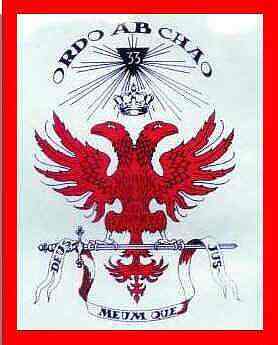 Order from chaos
CIA/MI6/Mossad/occultist
organised crime
18Jul12 - Libya, Syria and Iran, NATO and Israel's fascist obsession with regime change
Thu12Jul12 - GUARDIAN - The Syrian opposition: who's doing the talking?
Tue26Jun12 - Olympics not an easy target, says Bilderberg cultist & MI5 boss
May09 - American Free Press - BILDERBERG 2009 AGENDA EXPOSED
30Nov08 - Online Journal - What is Obama Thinking About?
02Nov08 - Global Financial Coup - J'Accuse Bilderberg
BRISTOL Wednesday 18th July 2012 - Tony Gosling
http://www.911forum.org.uk/board/viewtopic.php?p=161699#161699
Today's assassination of senior Syrian government officials, by NATO led terrorists in Damascus, brings us to a new low in a horrifying war of physical and mental attrition. It is a civil war that NATO want to happen, after all their friends are supplying the minority with weapons.
Today’s bombings in Damascus and Bulgaria may as well have been carried out by Hillary Clinton or Benjamin Netanyahu themselves. There is plenty of evidence of their love of ‘black ops’. And both bombings serve their joint purpose at the UN Security Council this week. And the purposes of their backers the private owners of the West’s monstrous Military Industrial Complex.
Even Eisenhower would have found this generation’s war profiteers a hard cookie to chew. But quite how many millions of human souls across this fragile world of ours do they hope to fool by their gameplays, and for how long, is another question entirely. Because Clinton and Netanyahu are painting themselves into a psychopath’s corner, the only way out of which will be impeachment, or an open Third World War.
Not since the days running up to World Wars One and Two have we seen such political murder cruelly calculated to take the world's superpowers to the brink.
The assassinations come in the run-up to this week's UN Security Council resolutions and are timed to send a mainstream media message to NATO zone domestic populations. “Assad can no longer rule the country, it is time for “regime change””. But these old tricks will not persuade China or Russia.
The governance of Syria is no business of Hillary Clinton. The ‘civil war’ onto which NATO and its Saudi allies are pouring petrol of heavy weapons is not about Assad, it is about the integrity of the regime, the good people of Syria, and recently democratically affirmed constitution they represent. Assad’s independence cannot be tolerated, he is manning a road-block on the way to Iran.
NATO had a choice after Gaddafi was sodomised with a bayonet by that mob in Libya. They could move straight to pulverising Iran from the air, cyberspace and using secretive space weapons. But that would leave NATO having to deal with what would be a less credulous Syrian rebel population, less hypnotised by Al Quaeda's calls to oust the 'infidel' Assad. No matter how many rocket propelled grenades Allah put into their hands. So the NATO/Israeli axis chose to bring Syria to heel first.
Since they have absolutely no moral or legal right to take out Presidents Assad nor Ahmadinejad NATO have had to rely on groupthink in the Western Mainstream press firstly to win domestic hearts and minds and secondly to ensure their occult command centres and generals are invisible and invulnerable.
We come up again here against the hideous paradox which has challenged humanity since the dawn of time. How can peace loving, honest people ever win a battle against the ruthless, the scheming and the grasping?
As Simon Heffer recently pointed out in the Daily Mail, traditionally a pro-Tory paper, “We are no longer being governed, just patronised by self-regarding pygmies who play at politics” To them it is all a game, in the NATO zone's 21st century post-modern version of democracy senior politicians are wholly-owned subsidiaries of fascist financiers.
Even opposition politicians are permanently missing the point diluted by bad advice, bought columnists and politicking which propels vain, inept individuals to the top positions.
The real power brokers are operating behind the scenes. Just as in the Italian P2 lodge scandal in 1980s Italy the nations are being run by secret committees of the unelected and unaccountable.
And this is the evil genius of our Hitlerian masters the Kissingers, Perles and the Strategic Communications propaganda barons, Grand Masters of misery in this unhappy world, is that, like the Wizard of Oz, as they remain behind the curtain, not even our own people know who leads them.
Like the North Welsh Ordovices tribe during the Roman invasion they are impossible to suppress because their command citadel is invisible and if the enemy were to come they simply melt away into the shadows.
Which is where we come to the heart of the matter. Just as the anonymity of NATO zone leadership overtly destroys Afghanistan, Iraq, Libya and the rest for KBR and others to cash in on rebuilding. It covertly destroys the motherland, setting us up for an almighty civil war with our own rulers who, make no mistake, when they have finished their games in the Middle East will turn their Sauron's eye on us.
Their other disguise is their Jewish ancestry deflect criticism by a media which is rightly cautious to avoid repeating past genocide. This makes their betrayal of Jewish Torah heritage doubly wrong as they quietly take the brown envelope. And sell their soul to the 4th Reich money power that murdered the holders of the noble Rabinnic tradition they have betrayed.
That same media seems almost unaware though that Muslims now are being demonised just like the Jews were in the 1930s. And that the real enemy of our shadow leaders is faith. Jews yesterday, Muslims today and Christians tomorrow.
A child understands, the drafters of the UN Charter understood. But the simple fact of Afghanistan, Iraq and Libyan people’s right, indeed duty, of self-defence in the face of fascist adventurism is taboo. What if tens of thousands of Afghans parachuted into Britain to tell us how to think. Might we not kill them? Indeed we might.
On second thoughts though, regime change in Britain may be no bad thing at all. I can give a cast iron guarantee that if you were to wander out the back of the South Bank’s Royal Festival Hall and pick on the first beggar you came across, that person would have more integrity and popular success as a ruler than, and increasingly up ‘til today, any Prime Minster since Harold Wilson.
Just as in World War Two, we peace lovers must be less trusting. Reluctantly we must start again to 'think like a Nazi' to assess and prepare to tackle such an utterly evil enemy, this time within. Then the enemy was Hitler and Nazi Germany, now the enemy is a monstrous financial 4th Reich which dominates all the political institutions in Israel and the NATO zone.
The enemy within uses our resources to feed their power habit. Many are now feeling what it was like for ordinary Germans in the 1930s during Hitler's rise to power. It is not just the financial disaster we have in common with then, but the ever more comfortable gait of war criminals such as Zipi Livni, Geoff Hoon and Tony Blair strutting around the streets of London today.
The culture of legal impunity is now thoroughly embedded in Britain and only Barbara Tucker's camp on Parliament Square seems to stand against this Pinochet's Britain, one woman from a military family representing the aspirations of a nation.
In 1940 Prime Minister Winston Churchill gave his ‘finest hour’ speech, citing Britain, quite rightly, as standing alone against the looming destruction of 'Christian Civilisation'. But right up until he was sacked in 1938, Nazi admirer Lord Reith had censored that sentiment, censored Churchill’s voice from the British airwaves.
That’s why freedom of expression was top of the list when our grandparents sat down to learn the lessons of World War Two and left us the UN Charter.
Their are thousands of voices crying out against these war crimes which are leading us inexorably to our young men coming home in body bags, and to WW3, and shamefully that sentiment is being smothered again by today’s BBC.
Chris Patten sold out the democratic aspirations of our people in Hong Kong, 400 thousand marched the other day against his betrayal. Did the BBC not tell you? And Patten was roundly rejected by the good people of Bath in 1992.
Marcus Agius said he’d resigned as Chairman of Barclays the other day but didn’t. These are the people who have just chosen our new Director General.
Time to wake another tramp up from his slumber under the arches by the Festival Hall.
The bombs doors are open. The plans have been drawn up.
This has been brewing for a time. The sheer energy and meticulous planning that's gone into this change of regime – it's breathtaking. The soft power and political reach of the big foundations and policy bodies is vast, but scrutiny is no respecter of fancy titles and fellowships and "strategy briefings". Executive director of what, it asks. Having "democracy" or "human rights" in your job title doesn't give you a free pass.
And if you're a "communications director" it means your words should be weighed extra carefully. Weiss and Fakher, both communications directors – PR professionals. At the Chatham House event in June 2011, Monajed is listed as: "Ausama Monajed, director of communications, National Initiative for Change" and he was head of PR for the MJD. The creator of the news website NOW Lebanon, Eli Khoury, is a Saatchi advertising executive. These communications directors are working hard to create what Tamara Wittes called a "positive brand".
They're selling the idea of military intervention and regime change, and the mainstream news is hungry to buy. Many of the "activists" and spokespeople representing the Syrian opposition are closely (and in many cases financially) interlinked with the US and London – the very people who would be doing the intervening. Which means information and statistics from these sources isn't necessarily pure news – it's a sales pitch, a PR campaign.
http://www.guardian.co.uk/commentisfree/2012/jul/12/syrian-opposition- doing-the-talking
The media have been too passive when it comes to Syrian opposition sources, without scrutinising their backgrounds and their political connections. Time for a closer look …
Charlie Skelton - guardian.co.uk, Thursday 12 July 2012 15.48 BST
A nightmare is unfolding across Syria, in the homes of al-Heffa and the streets of Houla. And we all know how the story ends: with thousands of soldiers and civilians killed, towns and families destroyed, and President Assad beaten to death in a ditch.
This is the story of the Syrian war, but there is another story to be told. A tale less bloody, but nevertheless important. This is a story about the storytellers: the spokespeople, the "experts on Syria", the "democracy activists". The statement makers. The people who "urge" and "warn" and "call for action".
It's a tale about some of the most quoted members of the Syrian opposition and their connection to the Anglo-American opposition creation business. The mainstream news media have, in the main, been remarkably passive when it comes to Syrian sources: billing them simply as "official spokesmen" or "pro-democracy campaigners" without, for the most part, scrutinising their statements, their backgrounds or their political connections.
It's important to stress: to investigate the background of a Syrian spokesperson is not to doubt the sincerity of his or her opposition to Assad. But a passionate hatred of the Assad regime is no guarantee of independence. Indeed, a number of key figures in the Syrian opposition movement are long-term exiles who were receiving US government funding to undermine the Assad government long before the Arab spring broke out.
Though it is not yet stated US government policy to oust Assad by force, these spokespeople are vocal advocates of foreign military intervention in Syria and thus natural allies of well-known US neoconservatives who supported Bush's invasion of Iraq and are now pressuring the Obama administration to intervene. As we will see, several of these spokespeople have found support, and in some cases developed long and lucrative relationships with advocates of military intervention on both sides of the Atlantic.
"The sand is running out of the hour glass," said Hillary Clinton on Sunday. So, as the fighting in Syria intensifies, and Russian warships set sail for Tartus, it's high time to take a closer look at those who are speaking out on behalf of the Syrian people.
The most quoted of the opposition spokespeople are the official representatives of the Syrian National Council. The SNC is not the only Syrian opposition group – but it is generally recognised as "the main opposition coalition" (BBC). The Washington Times describes it as "an umbrella group of rival factions based outside Syria". Certainly the SNC is the opposition group that's had the closest dealings with western powers – and has called for foreign intervention from the early stages of the uprising. In February of this year, at the opening of the Friends of Syria summit in Tunisia, William Hague declared: "I will meet leaders of the Syrian National Council in a few minutes' time … We, in common with other nations, will now treat them and recognise them as a legitimate representative of the Syrian people."
The most senior of the SNC's official spokespeople is the Paris-based Syrian academic Bassma Kodmani.
Here is Bassma Kodmani, seen leaving this year's Bilderberg conference in Chantilly, Virginia.
Kodmani is a member of the executive bureau and head of foreign affairs, Syrian National Council. Kodmani is close to the centre of the SNC power structure, and one of the council's most vocal spokespeople. "No dialogue with the ruling regime is possible. We can only discuss how to move on to a different political system," she declared this week. And here she is, quoted by the newswire AFP: "The next step needs to be a resolution under Chapter VII, which allows for the use of all legitimate means, coercive means, embargo on arms, as well as the use of force to oblige the regime to comply."
This statement translates into the headline "Syrians call for armed peacekeepers" (Australia's Herald Sun). When large-scale international military action is being called for, it seems only reasonable to ask: who exactly is calling for it? We can say, simply, "an official SNC spokesperson," or we can look a little closer.
This year was Kodmani's second Bilderberg. At the 2008 conference, Kodmani was listed as French; by 2012, her Frenchness had fallen away and she was listed simply as "international" – her homeland had become the world of international relations.
Back a few years, in 2005, Kodmani was working for the Ford Foundation in Cairo, where she was director of their governance and international co-operation programme. The Ford Foundation is a vast organisation, headquartered in New York, and Kodmani was already fairly senior. But she was about to jump up a league.
Around this time, in February 2005, US-Syrian relations collapsed, and President Bush recalled his ambassador from Damascus. A lot of opposition projects date from this period. "The US money for Syrian opposition figures began flowing under President George W Bush after he effectively froze political ties with Damascus in 2005," says the Washington Post.
In September 2005, Kodmani was made the executive director of the Arab Reform Initiative (ARI) – a research programme initiated by the powerful US lobby group, the Council on Foreign Relations (CFR).
The CFR is an elite US foreign policy thinktank, and the Arab Reform Initiative is described on its website as a "CFR Project" . More specifically, the ARI was initiated by a group within the CFR called the "US/Middle East Project" – a body of senior diplomats, intelligence officers and financiers, the stated aim of which is to undertake regional "policy analysis" in order "to prevent conflict and promote stability". The US/Middle East Project pursues these goals under the guidance of an international board chaired by General (Ret.) Brent Scowcroft.
Brent Scowcroft (chairman emeritus) is a former national security adviser to the US president – he took over the role from Henry Kissinger. Sitting alongside Scowcroft of the international board is his fellow geo-strategist, Zbigniew Brzezinski, who succeeded him as the national security adviser, and Peter Sutherland, the chairman of Goldman Sachs International. So, as early as 2005, we've got a senior wing of the western intelligence/banking establishment selecting Kodmani to run a Middle East research project. In September of that year, Kodmani was made full-time director of the programme. Earlier in 2005, the CFR assigned "financial oversight" of the project to the Centre for European Reform (CER). In come the British.
The CER is overseen by Lord Kerr, the deputy chairman of Royal Dutch Shell. Kerr is a former head of the diplomatic service and is a senior adviser at Chatham House (a thinktank showcasing the best brains of the British diplomatic establishment).
In charge of the CER on a day-to-day basis is Charles Grant, former defence editor of the Economist, and these days a member of the European Council on Foreign Relations, a "pan-European thinktank" packed with diplomats, industrialists, professors and prime ministers. On its list of members you'll find the name: "Bassma Kodmani (France/Syria) – Executive Director, Arab Reform Initiative".
Another name on the list: George Soros – the financier whose non-profit "Open Society Foundations" is a primary funding source of the ECFR. At this level, the worlds of banking, diplomacy, industry, intelligence and the various policy institutes and foundations all mesh together, and there, in the middle of it all, is Kodmani.
The point is, Kodmani is not some random "pro-democracy activist" who happens to have found herself in front of a microphone. She has impeccable international diplomacy credentials: she holds the position of research director at the Académie Diplomatique Internationale – "an independent and neutral institution dedicated to promoting modern diplomacy". The Académie is headed by Jean-Claude Cousseran, a former head of the DGSE – the French foreign intelligence service.
A picture is emerging of Kodmani as a trusted lieutenant of the Anglo-American democracy-promotion industry. Her "province of origin" (according to the SNC website) is Damascus, but she has close and long-standing professional relationships with precisely those powers she's calling upon to intervene in Syria.
And many of her spokesmen colleagues are equally well-connected.
Another often quoted SNC representative is Radwan Ziadeh – director of foreign relations at the Syrian National Council. Ziadeh has an impressive CV: he's a senior fellow at the federally funded Washington thinktank, the US Institute of Peace (the USIP Board of Directors is packed with alumni of the defence department and the national security council; its president is Richard Solomon, former adviser to Kissinger at the NSC).
In February this year, Ziadeh joined an elite bunch of Washington hawks to sign a letter calling upon Obama to intervene in Syria: his fellow signatories include James Woolsey (former CIA chief), Karl Rove (Bush Jr's handler), Clifford May (Committee on the Present Danger) and Elizabeth Cheney, former head of the Pentagon's Iran-Syria Operations Group.
Ziadeh is a relentless organiser, a blue-chip Washington insider with links to some of the most powerful establishment thinktanks. Ziadeh's connections extend all the way to London. In 2009 he became a visiting fellow at Chatham House, and in June of last year he featured on the panel at one of their events – "Envisioning Syria's Political Future" – sharing a platform with fellow SNC spokesman Ausama Monajed (more on Monajed below) and SNC member Najib Ghadbian.
Ghadbian was identified by the Wall Street Journal as an early intermediary between the US government and the Syrian opposition in exile: "An initial contact between the White House and NSF [National Salvation Front] was forged by Najib Ghadbian, a University of Arkansas political scientist." This was back in 2005. The watershed year.
These days, Ghadbian is a member of the general secretariat of the SNC, and is on the advisory board of a Washington-based policy body called the Syrian Center for Political and Strategic Studies (SCPSS) – an organisation co-founded by Ziadeh.
Ziadeh has been making connections like this for years. Back in 2008, Ziadeh took part in a meeting of opposition figures in a Washington government building: a mini-conference called "Syria In-Transition". The meeting was co-sponsored by a US-based body called the Democracy Council and a UK-based organisation called the Movement for Justice and Development (MJD). It was a big day for the MJD – their chairman, Anas Al-Abdah, had travelled to Washington from Britain for the event, along with their director of public relations. Here, from the MJD's website, is a description of the day: "The conference saw an exceptional turn out as the allocated hall was packed with guests from the House of Representatives and the Senate, representatives of studies centres, journalists and Syrian expatriats [sic] in the USA."
The day opened with a keynote speech by James Prince, head of the Democracy Council. Ziadeh was on a panel chaired by Joshua Muravchik (the ultra-interventionist author of the 2006 op-ed "Bomb Iran"). The topic of the discussion was "The Emergence of Organized Opposition". Sitting beside Ziadeh on the panel was the public relations director of the MJD – a man who would later become his fellow SNC spokesperson – Ausama Monajed.
Along with Kodmani and Ziadeh, Ausama (or sometimes Osama) Monajed is one of the most important SNC spokespeople. There are others, of course – the SNC is a big beast and includes the Muslim Brotherhood. The opposition to Assad is wide-ranging, but these are some of the key voices. There are other official spokespeople with long political careers, like George Sabra of the Syrian Democratic People's party – Sabra has suffered arrest and lengthy imprisonment in his fight against the "repressive and totalitarian regime in Syria". And there are other opposition voices outside the SNC, such as the writer Michel Kilo, who speaks eloquently of the violence tearing apart his country: "Syria is being destroyed – street after street, city after city, village after village. What kind of solution is that? In order for a small group of people to remain in power, the whole country is being destroyed."
But there's no doubt that the primary opposition body is the SNC, and Kodmani, Ziadeh and Monajed are often to be found representing it. Monajed frequently crops up as a commentator on TV news channels. Here he is on the BBC, speaking from their Washington bureau. Monajed doesn't sugar-coat his message: "We are watching civilians being slaughtered and kids being slaughtered and killed and women being raped on the TV screens every day."
Meanwhile, over on Al Jazeera, Monajed talks about "what's really happening, in reality, on the ground" – about "the militiamen of Assad" who "come and rape their women, slaughter their children, and kill their elderly".
Monajed turned up, just a few days ago, as a blogger on Huffington Post UK, where he explained, at length: "Why the World Must Intervene in Syria" – calling for "direct military assistance" and "foreign military aid". So, again, a fair question might be: who is this spokesman calling for military intervention?
Monajed is a member of the SNC, adviser to its president, and according to his SNC biography, "the Founder and Director of Barada Television", a pro-opposition satellite channel based in Vauxhall, south London. In 2008, a few months after attending Syria In-Transition conference, Monajed was back in Washington, invited to lunch with George W Bush, along with a handful of other favoured dissidents (you can see Monajed in the souvenir photo, third from the right, in the red tie, near Condoleezza Rice – up the other end from Garry Kasparov).
At this time, in 2008, the US state department knew Monajed as "director of public relations for the Movement for Justice and Development (MJD), which leads the struggle for peaceful and democratic change in Syria".
Let's look closer at the MJD. Last year, the Washington Post picked up a story from WikiLeaks, which had published a mass of leaked diplomatic cables. These cables appear to show a remarkable flow of money from the US state department to the British-based Movement for Justice and Development. According to the Washington Post's report: "Barada TV is closely affiliated with the Movement for Justice and Development, a London-based network of Syrian exiles. Classified US diplomatic cables show that the state department has funnelled as much as $6m to the group since 2006 to operate the satellite channel and finance other activities inside Syria."
A state department spokesman responded to this story by saying: "Trying to promote a transformation to a more democratic process in this society is not undermining necessarily the existing government." And they're right, it's not "necessarily" that.
When asked about the state department money, Monajed himself said that he "could not confirm" US state department funding for Barada TV, but said: "I didn't receive a penny myself." Malik al -Abdeh, until very recently Barada TV's editor-in-chief insisted: "we have had no direct dealings with the US state department". The meaning of the sentence turns on that word "direct". It is worth noting that Malik al Abdeh also happens to be one of the founders of the Movement for Justice and Development (the recipient of the state department $6m, according to the leaked cable). And he's the brother of the chairman, Anas Al-Abdah. He's also the co-holder of the MJD trademark: What Malik al Abdeh does admit is that Barada TV gets a large chunk of its funding from an American non-profit organisation: the Democracy Council. One of the co-sponsors (with the MJD) of Syria In-Transition mini-conference. So what we see, in 2008, at the same meeting, are the leaders of precisely those organisations identified in the Wiki:eaks cables as the conduit (the Democracy Council) and recipient (the MJD) of large amounts of state department money.
The Democracy Council (a US-based grant distributor) lists the state department as one of its sources of funding. How it works is this: the Democracy Council serves as a grant-administering intermediary between the state department's "Middle East Partnership Initiative" and "local partners" (such as Barada TV). As the Washington Post reports:
"Several US diplomatic cables from the embassy in Damascus reveal that the Syrian exiles received money from a State Department program called the Middle East Partnership Initiative. According to the cables, the State Department funnelled money to the exile group via the Democracy Council, a Los Angeles-based nonprofit."
The same report highlights a 2009 cable from the US Embassy in Syria that says that the Democracy Council received $6.3m from the state department to run a Syria-related programme, the "Civil Society Strengthening Initiative". The cable describes this as "a discrete collaborative effort between the Democracy Council and local partners" aimed at producing, amongst other things, "various broadcast concepts." According to the Washington Post: "Other cables make clear that one of those concepts was Barada TV."
Until a few months ago, the state department's Middle East Partnership Initiative was overseen by Tamara Cofman Wittes (she's now at the Brookings Institution – an influential Washington thinktank). Of MEPI, she said that it "created a positive 'brand' for US democracy promotion efforts". While working there she declared: "There are a lot of organizations in Syria and other countries that are seeking changes from their government … That's an agenda that we believe in and we're going to support." And by support, she means bankroll.
This is nothing new. Go back a while to early 2006, and you have the state department announcing a new "funding opportunity" called the "Syria Democracy Program". On offer, grants worth "$5m in Federal Fiscal Year 2006". The aim of the grants? "To accelerate the work of reformers in Syria."
These days, the cash is flowing in faster than ever. At the beginning of June 2012, the Syrian Business Forum was launched in Doha by opposition leaders including Wael Merza (SNC secretary general). "This fund has been established to support all components of the revolution in Syria," said Merza. The size of the fund? Some $300m. It's by no means clear where the money has come from, although Merza "hinted at strong financial support from Gulf Arab states for the new fund" (Al Jazeera). At the launch, Merza said that about $150m had already been spent, in part on the Free Syrian Army.
Merza's group of Syrian businessmen made an appearance at a World Economic Forum conference titled the "Platform for International Co-operation" held in Istanbul in November 2011. All part of the process whereby the SNC has grown in reputation, to become, in the words of William Hague, "a legitimate representative of the Syrian people" – and able, openly, to handle this much funding.
Building legitimacy – of opposition, of representation, of intervention – is the essential propaganda battle.
In a USA Today op-ed written in February this year, Ambassador Dennis Ross declared: "It is time to raise the status of the Syrian National Council". What he wanted, urgently, is "to create an aura of inevitability about the SNC as the alternative to Assad." The aura of inevitability. Winning the battle in advance.
A key combatant in this battle for hearts and minds is the American journalist and Daily Telegraph blogger, Michael Weiss.
One of the most widely quoted western experts on Syria – and an enthusiast for western intervention – Michael Weiss echoes Ambassador Ross when he says: "Military intervention in Syria isn't so much a matter of preference as an inevitability."
Some of Weiss's interventionist writings can be found on a Beirut-based, Washington-friendly website called "NOW Lebanon" – whose "NOW Syria" section is an important source of Syrian updates. NOW Lebanon was set up in 2007 by Saatchi & Saatchi executive Eli Khoury. Khoury has been described by the advertising industry as a "strategic communications specialist, specialising in corporate and government image and brand development".
Weiss told NOW Lebanon, back in May, that thanks to the influx of weapons to Syrian rebels "we've already begun to see some results." He showed a similar approval of military developments a few months earlier, in a piece for the New Republic: "In the past several weeks, the Free Syrian Army and other independent rebel brigades have made great strides" – whereupon, as any blogger might, he laid out his "Blueprint for a Military Intervention in Syria".
But Weiss is not only a blogger. He's also the director of communications and public relations at the Henry Jackson Society, an ultra-ultra-hawkish foreign policy thinktank.
The Henry Jackson Society's international patrons include: James "ex-CIA boss" Woolsey, Michael "homeland security" Chertoff, William "PNAC" Kristol, Robert "PNAC" Kagan', Joshua "Bomb Iran" Muravchick, and Richard "Prince of Darkness" Perle. The Society is run by Alan Mendoza, chief adviser to the all-party parliamentary group on transatlantic and international security.
The Henry Jackson Society is uncompromising in its "forward strategy" towards democracy. And Weiss is in charge of the message. The Henry Jackson Society is proud of its PR chief's far-reaching influence: "He is the author of the influential report "Intervention in Syria? An Assessment of Legality, Logistics and Hazards", which was repurposed and endorsed by the Syrian National Council."
Weiss's original report was re-named "Safe Area for Syria" – and ended up on the official syriancouncil.org website, as part of their military bureau's strategic literature. The repurposing of the HJS report was undertaken by the founder and executive director of the Strategic Research and Communication Centre (SRCC) – one Ausama Monajed.
So, the founder of Barada TV, Ausama Monajed, edited Weiss's report, published it through his own organisation (the SRCC) and passed it on to the Syrian National Council, with the support of the Henry Jackson Society.
The relationship couldn't be closer. Monajed even ends up handling inquiries for "press interviews with Michael Weiss". Weiss is not the only strategist to have sketched out the roadmap to this war (many thinktanks have thought it out, many hawks have talked it up), but some of the sharpest detailing is his.
The justification for the "inevitable" military intervention is the savagery of President Assad's regime: the atrocities, the shelling, the human rights abuses. Information is crucial here, and one source above all has been providing us with data about Syria. It is quoted at every turn: "The head of the Syrian Observatory for Human Rights told VOA [Voice of America] that fighting and shelling killed at least 12 people in Homs province."
The Syrian Observatory for Human Rights is commonly used as a standalone source for news and statistics. Just this week, news agency AFP carried this story: "Syrian forces pounded Aleppo and Deir Ezzor provinces as at least 35 people were killed on Sunday across the country, among them 17 civilians, a watchdog reported." Various atrocities and casualty numbers are listed, all from a single source: "Observatory director Rami Abdel Rahman told AFP by phone."
Statistic after horrific statistic pours from "the Britain-based Syrian Observatory for Human Rights" (AP). It's hard to find a news report about Syria that doesn't cite them. But who are they? "They" are Rami Abdulrahman (or Rami Abdel Rahman), who lives in Coventry.
According to a Reuters report in December of last year: "When he isn't fielding calls from international media, Abdulrahman is a few minutes down the road at his clothes shop, which he runs with his wife."
When the Guardian's Middle East live blog cited "Rami Abdul-Rahman of the Syrian Observatory for Human Rights" it also linked to a sceptical article in the Modern Tokyo Times – an article which suggested news outlets could be a bit "more objective about their sources" when quoting "this so-called entity", the SOHR.
That name, the "Syrian Observatory of Human Rights", sound so grand, so unimpeachable, so objective. And yet when Abdulrahman and his "Britain-based NGO" (AFP/NOW Lebanon) are the sole source for so many news stories about such an important subject, it would seem reasonable to submit this body to a little more scrutiny than it's had to date.
The Observatory is by no means the only Syrian news source to be quoted freely with little or no scrutiny …
The relationship between Ausama Monajed, the SNC, the Henry Jackson hawks and an unquestioning media can be seen in the case of Hamza Fakher. On 1 January, Nick Cohen wrote in the Observer: "To grasp the scale of the barbarism, listen to Hamza Fakher, a pro-democracy activist, who is one of the most reliable sources on the crimes the regime's news blackout hides."
He goes on to recount Fakher's horrific tales of torture and mass murder. Fakher tells Cohen of a new hot-plate torture technique that he's heard about: "imagine all the melting flesh reaching the bone before the detainee falls on the plate". The following day, Shamik Das, writing on "evidence-based" progressive blog Left Foot Forward, quotes the same source: "Hamza Fakher, a pro-democracy activist, describes the sickening reality …" – and the account of atrocities given to Cohen is repeated.
So, who exactly is this "pro-democracy activist", Hamza Fakher?
Fakher, it turns out, is the co-author of Revolution in Danger , a "Henry Jackson Society Strategic Briefing", published in February of this year. He co-wrote this briefing paper with the Henry Jackson Society's communications director, Michael Weiss. And when he's not co-writing Henry Jackson Society strategic briefings, Fakher is the communication manager of the London-based Strategic Research and Communication Centre (SRCC). According to their website, "He joined the centre in 2011 and has been in charge of the centre's communication strategy and products."
As you may recall, the SRCC is run by one Ausama Monajed: "Mr Monajed founded the centre in 2010. He is widely quoted and interviewed in international press and media outlets. He previously worked as communication consultant in Europe and the US and formerly served as the director of Barada Television …".
Monajed is Fakher's boss.
If this wasn't enough, for a final Washington twist, on the board of the Strategic Research and Communication Centre sits Murhaf Jouejati, a professor at the National Defence University in DC – "the premier center for Joint Professional Military Education (JPME)" which is "under the direction of the Chairman, Joint Chiefs of Staff."
If you happen to be planning a trip to Monajed's "Strategic Research and Communication Centre", you'll find it here: Strategic Research & Communication Centre, Office 36, 88-90 Hatton Garden, Holborn, London EC1N 8PN.
Office 36 at 88-90 Hatton Garden is also where you'll find the London headquarters of The Fake Tan Company, Supercar 4 U Limited, Moola loans (a "trusted loans company"), Ultimate Screeding (for all your screeding needs), and The London School of Attraction – "a London-based training company which helps men develop the skills and confidence to meet and attract women." And about a hundred other businesses besides. It's a virtual office. There's something oddly appropriate about this. A "communication centre" that doesn't even have a centre – a grand name but no physical substance.
That's the reality of Hamza Fakher. On 27 May, Shamik Das of Left Foot Forward quotes again from Fakher's account of atrocities, which he now describes as an "eyewitness account" (which Cohen never said it was) and which by now has hardened into "the record of the Assad regime".
So, a report of atrocities given by a Henry Jackson Society strategist, who is the communications manager of Mosafed's PR department, has acquired the gravitas of a historical "record".
This is not to suggest that the account of atrocities must be untrue, but how many of those who give it currency are scrutinising its origins?
And let's not forget, whatever destabilisation has been done in the realm of news and public opinion is being carried out twofold on the ground. We already know that (at the very least) "the Central Intelligence Agency and State Department … are helping the opposition Free Syrian Army develop logistical routes for moving supplies into Syria and providing communications training."
The bombs doors are open. The plans have been drawn up.
This has been brewing for a time. The sheer energy and meticulous planning that's gone into this change of regime – it's breathtaking. The soft power and political reach of the big foundations and policy bodies is vast, but scrutiny is no respecter of fancy titles and fellowships and "strategy briefings". Executive director of what, it asks. Having "democracy" or "human rights" in your job title doesn't give you a free pass.
And if you're a "communications director" it means your words should be weighed extra carefully. Weiss and Fakher, both communications directors – PR professionals. At the Chatham House event in June 2011, Monajed is listed as: "Ausama Monajed, director of communications, National Initiative for Change" and he was head of PR for the MJD. The creator of the news website NOW Lebanon, Eli Khoury, is a Saatchi advertising executive. These communications directors are working hard to create what Tamara Wittes called a "positive brand".
They're selling the idea of military intervention and regime change, and the mainstream news is hungry to buy. Many of the "activists" and spokespeople representing the Syrian opposition are closely (and in many cases financially) interlinked with the US and London – the very people who would be doing the intervening. Which means information and statistics from these sources isn't necessarily pure news – it's a sales pitch, a PR campaign.
But it's never too late to ask questions, to scrutinise sources. Asking questions doesn't make you a cheerleader for Assad – that's a false argument. It just makes you less susceptible to spin. The good news is, there's a sceptic born every minute.
http://www.guardian.co.uk/commentisfree/2012/jul/12/syrian-opposition-doing-the-talking
Channel 4 News - Tuesday 26 June 2012 - Simon Israel - Home Affairs Correspondent
http://www.channel4.com/news/london-2012-not-an-easy-target-says-mi5-boss
In an assessment of the security threat facing the UK, MI5 Director-General Jonathan Evans predicts a successful and memorable London Olympics but expresses growing concern about Iran.
The head of MI5 says the Olympics Games is not an easy target for terrorists, writes Channel 4 News Home Affairs Correspondent Simon Israel.
Jonathan Evans told an invited audience in the City last night that while there's no such thing as guaranteed security he predicted a successful and memorable games.
The director general used his first public speech in nearly two years to deliver an updated broad assessment of the terror threat to the UK and its citizens.
But again there are no numbers - no quantifying of the threat, no details on the plethora of networks plotting some attack or other.
The Olympic Games, he says, have dominated much of the thinking but added: "..the Games are not an easy target, and the fact that we have disrupted multiple terrorst plots here and abroad in recent years demonstrates that the UK as a whole is not an easy target."
Inside venues are considered the most diffcult given the security arrangements, but an attack anywhere would be seen as an attack on the Olympics.
The security services have been planning for the worst, another 7/7 or a Mumbai-style attack - even another 9/11 (hence the proposal to place surface-to-air missiles on top of tower blocks).
But that is not what they are currently predicting. There are suggestions there's been a significant increase in "threat intelligence" but little of it amounts to credible plots.
In Monday night's speech the head of MI5 said "in back rooms and in cars on the streets of this country there is no shortage of individuals talking about wanting to mount terrorist attacks here".
The security think-tank Royal United Services Institute (RUSI) has indentified 43 potential plots or serious incidents since 9/11.
MI5's assessment is there's been 11 credible terror plots is that since then, which amounts to one a year.
Mr Evans said disruption and supression is leading to a form of stalemate - "They haven't stopped trying, but we have got better at stopping them."
Channel 4 News understands that close to 600,000 people will have gone through accreditation process by the time the games get underway and out of that only a a tiny number have come up on MI5's radar.
Security sources refused to say if some of the "hits" were individuals assigned to visiting international teams.
The head of MI5 also expressed growing concern about Iran.
It's been revealed that MI5 has in the last year has significantly reinforced a dedicated unit, fearing that crunchtime may arrive next year over Iran's nuclear intentions. and the UK is widely seen as a potential target given recent attempted terrorists plots against Israeli interests.
He warned: "A return to state-sponsored terrorism by Iran or its associates, such as Hezbollah, cannot be ruled out as pressure on the Iranian leadership increases."
He also described the extent of cyber espionage and cyber crime as astonishing - on an industrial scale, and MI5 was currently investigating attacks on more than a dozen companies.
One un-named example he gave was a major London listed company which lost £800m, not just through intellectual property loss but also from commercial disadvantage in contractual negotiations.
http://www.americanfreepress.net/html/bilderberg_2009_179.html
AFP’s editor crashed the secret meeting of the global elite and uncovered some scary schemes
By James P. Tucker Jr.
Bilderberg boys are a bunch of grumpy old men but remain fiercely dedicated to usurping sovereignty in the United States and throughout the world. Patriots can celebrate their setbacks but never let up: Bilderberg still threatens the sovereignty of all nations while fighting for world government.
Major goals remain exploiting the global recession and an imaginary “swine flu pandemic” to establish global departments of treasury and health under the United Nations. But at the May 14-17 meeting in Vouliagmeni, Greece, near Athens, Bilderberg took a keen interest in persuading the United States to surrender sovereignty to the International Criminal Court, or ICC.
Bilderberg is also setting up a “summit” in Israel June 8-11 so “the world’s leading regulatory experts” can “address the current economic situation in one forum,” said Zohar Goshen, chairman of a subgroup of the International Association of Securities Commissions (IOSCO). Mary Shapiro, chairman of the U.S. Securities and Exchange Commission, will represent this country.
Bilderberg found President Obama a Willing Wilkie at its June, 2008 meeting in Chantilly, Va. near Washington. They were reassured when he chose their boy, Harold Koh, a strong advocate of the U.S. accepting the ICC, as the State Department’s top lawyer.
In the Penn State Law Review, Koh wrote sneeringly of “nationalists” who oppose surrendering sovereignty to international institutions, including the ICC. He praised the “transnationalist faction” on the Supreme Court and the wisdom of the jurists for their rejection of the “nationalist faction.”
“Generally speaking, the transnationalists tend to emphasize the interdependence between the United States and the rest of the world, while the nationalists tend instead to focus more on preserving American autonomy,” Koh wrote. “The transnationalists believe in and promote the blending of international and domestic law, while nationalists continue to maintain a rigid separation of domestic from foreign law.”
The “transnationalists view domestic courts as having a critical role to play in domesticating international law into U.S. law, while nationalists argue instead that only the political branches can internalize international law,”
Koh wrote. “Transnationalists believe that U.S. courts could and should use their interpretive powers to promote the development of a global legal system, while the nationalists tend to claim that U.S. courts should limit their attention to the development of a national system.”
Five Supreme Court justices have said, to Koh’s delight, that U.S. courts should take into consideration the rulings of foreign courts in deciding domestic cases. They are: John Paul Stevens, Anthony Kennedy, David Souter, Ruth Bader Ginsburg and Stephen Breyer.
In a Bilderberg warm up, the Washington-based American Society of International Law called on the U.S to embrace the ICC. These luminaries included former Supreme Court Justice Sandra Day O’Connor, former Rep. Mickey Edwards and a roster of educated fools.
Carl Bildt, Sweden’s minister for foreign affairs, made a pitch for two other major Bilderberg goals: creating a global Department of Treasury and Department of Health, with all nations surrendering sovereignty over these issues to the UN. The International Monetary Fund (IMF) is to become the Treasury Department and the World Health Organization the World Health Department. But Bildt seized on an old Bilderberg issue, global warming, to make the case for WHO. Bilderberg propaganda over a “swine flu pandemic” has fallen victim to facts: On average, 300,000 Americans develop flu each year and 30,000 die. Only a few have died or even been seriously afflicted by “swine flu.”
The world economic meltdown is a “once-in-a-generation crisis while global warming is a “once-in-a-millennium challenge,” Bildt told Bilderberg. Sources inside Bilderberg said Bildt’s speech mirrored an address he gave to the Carnegie Endowment for International Peace in Washington. Carnegie’s president, Jessica Mathews, is a long-time Bilderberg participant.
“We are at a critical time,” Bildt told Bilderberg. “The order of magnitude [of world crises] are more challenging than we are used to. The world economic recession has already reversed strong annual growth rates in many developing [poor] nations and in some parts of Europe and has the potential to bring down governments. . . . ”
“When we hit bottom, we can’t be sure where we’ll bounce back up,” Bildt said. “This is an urgent economic crisis unlike anything we have dealt with in living memory.” However, he called for a bounce-back within years, not a decade-long recession as some called for in efforts to exploit human misery.
Bildt then turned to selling global warming as the gateway to a World Health Department under the UN. Bilderberg boys, including David Rockefeller and others who inherited great wealth as the sons of smokestack industrialists, grabbed global warming as an issue more than a decade as a means of generating huge profits with investments to “save the planet.” Now, global warming has a new role.
“We know we need to take action,” Bildt said of global warming. “The global crisis is now,” he said. “The necessity to take action on climate change is now.” His calls for “global action” on these supposed “crises” were thinly disguised calls for UN control.
Bildt called for world (UN) solutions to virtually all problems. He cited the European Union as “model of integration, saying, “the EU is emerging as a global actor.” He advocates expanding NAFTA throughout the Western Hemisphere to create an “American Union.”
The International Monetary Fund sent a report to Bilderberg advocating its rise to the role of World Treasury Department. “Further actions by policymakers, particularly in the financial sector, are needed to restore market trust and confidence,” said Marek Belka, director of the IMF’s European department and former prime minister of Poland.
U.S. Treasury Secretary Timothy Geithner enthusiastically endorsed the plan for a World Treasury Department, although he received no assurance that he would become its leader. He expressed “hope” that American and European leaders could “work together” to achieve such a “global solution” to the world economic meltdown.
The IMF’s planned new role as a world Treasury Department should be welcome news to the “little guy,” Geithner told Bilderberg. “The damage has been unfair and indiscriminant,” he said. “Ordinary Americans, small business owners and community banks who did the right thing and played by the rules are suffering from the actions of those who took on too much risk.”
But, even with a World Treasury Department, problems will not disappear overnight, Geithner warned. “These are all welcoming signs, but the process of financial recovery and repair is going to take time,” he said, lending his weight to a relative short-term recession as opposed to those who backed a long-term recovery. The people of Europe and America will have suffered enough to embrace a World Treasury Department, he said.
“Our hope is that we can work with Europe on a global framework, a global infrastructure which has appropriate global oversight,” Geithner said. “We can’t allow institutions to cherry-pick among competing regulators and ship risk to where it faces the lowest standards and weakest constraints.”
Bilderberg is fervently working to persuade the Irish to accept an even stronger Lisbon Treaty, which would create an even stronger European Union, creating a permanent (instead of rotating) chairman and a more powerful Parliament. The EU Parliament can even now impose laws on member states.
Irish voters rejected this EU expansion in an earlier referendum, but Bilderberg is pressing for another vote. Citizens of France and Germany overwhelmingly opposed the measure, numerous polls showed, but their heads of state signed off. Ireland requires a referendum before approval.
A meeting is planned June 18-19 in Brussels to cross t’s and dot i’s in an effort to induce Irish voters to reverse themselves and endorse the treaty. Under EU rules, all states must back a change for it to take effect. Bilderberg leaders plan a “private meeting” in advance of the formal session to push ratification.
“They’re going to make us vote until we vote their way,” said an Irishman protesting at the gates of Bilderberg, who feared reprisals if identified. There were a large number of European journalists fighting to expose Bilderberg and much is being published in Europe. Many were seized by police, surrounded by pointed guns and had their film and notes seized.
But The Times of London had a helpful story the opening day of the Bilderberg meeting, Thursday, May 14. “What we have been able to establish from a World Bank spokesman, Alexis O’Brien, that the organization’s president, Robert Zoellick, will be in Athens on unspecified business May 14,” the paper said. “And that U.S. Treasury Secretary Tim Geithner’s public schedule is mysteriously empty for the next two days. Jo Ackermann, head of Deutsche Bank, will be traveling “somewhere in Europe.’
Jean-Claude Trichet, head of the European Central Bank, will not be around until the end of the week.” (This was a moment when all journalists were striving to identify Bilderberg participants.)
“Jim Tucker, veteran stalker of the Bilderberg club meetings, claims that [Margaret] Thatcher was ordered “to dismantle British sovereignty, but she said ‘no way,’ so they had her sacked,” the paper said. (Events confirmed this, as did Lady Thatcher in a later conversation with Tucker.)
http://www.americanfreepress.net/html/bilderberg_2009_179.html
By Jerry Mazza
Online Journal Associate Editor
Nov 12, 2008, 00:27
http://onlinejournal.com/artman/publish/article_3996.shtml
Barack, my brother. Mr. President-elect, what is going through your head? Rahm Israel Emmanuel for White House Chief of Staff? Rahm, who fought with the Israeli Army in the Gulf war, whose father Benjamin fought with the Irgun gang, the Zionist terror bombers of the King David Hotel; Rahm, the 2001 Freddie Mac board member involved with campaign scandals and contributions, personally raking in $231,655. I mean, just look in that guy’s eyes, scary. And that’s just the tip of the iceberg.
You are hanging out with guys whose rap sheets go deeper than anyone you met in South Chicago. Like Larry Summers, key lobbyist for the repeal of the Glass Steagall Act, after his 1999 Clinton appointment, leading the wolf pack to the Financial Services Modernization Act, to gut stock market regulation with all the predatory practices that put us in our present pickle. Larry who, as chief economist for the World Bank, actually wanted to import toxic garbage to poor Third World countries because the people were going to die younger anyway. Can you believe that, brother? David Rockefeller’s boy! Goldman Sachs Consultant, managing director D.E. Shaw Hedge Fund Group (gambling casino).
Jesus, this is the guy you want to run the Treasury? He’s as toxic as Paulson and then some.
And Paul Volker, former chairman of the Federal Reserve Board, 1980s Reagan era major player in kicking off financial deregulations, which ended in major bankruptcies, junk-bond mergers and acquisitions, climaxed by the 1987 Black Monday stock market crash. You want him to straighten out the crooks on Wall Street; him to avoid another crash? Good luck, my brother.
And Timothy Geithner, president of the Federal Reserve Bank of New York, the powerhouse financial institution in America. Tim, former Clinton Treasury official, ex-employee of Kissinger Associations, senior exec at the IMF, shapes finance policy behind the scenes, hangs with the Council on Foreign Relations. Do you really want him around?
Michael Chossudovsky in his article, Who are the Architects of Economic Collapse, said the above boys, along with ”Phil Gramm, Bernanke, Hank Paulson, Rubin, not to mention Alan Greenspan, et al are buddies; they play golf together; they have links to the Council on Foreign Relations and the Bilderberg Group; they act concurrently in accordance with the interests of Wall Street; they meet behind closed doors; they are on the same wave length; they are Democrats and Republicans.”
He added, “While they may disagree on some issues, they are firmly committed to the Washington-Wall Street Consensus. They are utterly ruthless in their management of economic and financial processes. Their actions are profit driven. Outside of their narrow interest in the ‘efficiency’ of ‘markets,’ they have little concern for ‘living human beings.’ How are people’s lives affected by the deadly gamut of macro-economic and financial reforms, which is spearheading entire sectors of economic activity into bankruptcy . . .”
I mean the curtain isn’t up on your presidency and the cast is getting trashed by major critics.
Chossudovsky asked, “Where are Obama’s ‘Main Street appointees’? Namely individuals who respond to the interests of people across America. There are no labor or community leaders on Obama’s list for key positions.
“The president-elect is appointing the architects of financial deregulation.
“Meaningful financial reform cannot be adopted by officials appointed by Wall Street and who act on behalf of Wall Street.
“Those who set the financial system ablaze in 1999, have been called back to turn out the fire.
“The proposed ‘solution’ to the crisis under the ‘bailout’ is the cause of further economic collapse.”
Damn it, he’s right. He went on to say . . .
“There are no policy solutions on the horizon.
“The banking conglomerates call the shots. They decide on the composition of the Obama Cabinet. They also decide on the agenda of the Washington Financial Summit (November 15, 2008) which is slated to lay the groundwork for the establishment of a new “global financial architecture.” If this is true, change it.”
And this . . .
“The Wall Street blueprint has already been discussed behind closed doors: the hidden agenda is to establish a unipolar international monetary system, dominated by US financial power, which in turn would be protected and secured by US military superiority.”
Chossudovsky called this . . .
“Neoliberalism with a ‘Human Face’
I mean, do you, Barack Hussein Obama want to be their “face?” Chossudovsky says, “There is no indication that Obama will break his ties to his Wall Street sponsors, who largely funded his election campaign.
“Goldman Sachs, J. P. Morgan Chase, Citigroup, Bill Gates’ Microsoft are among his main campaign contributors.
“Warren Buffett, among the world’s richest individuals, not only supported Barak Obama’s election campaign, he is a member of his transition team, which plays a key role deciding the composition of Obama’s cabinet.”
Say it isn’t so, Barack. Say it isn’t so.
Reviews like this could stop your administration cold. And those were just one writer’s highlights. Here’s a few from Paul Craig Roberts in his Online Journal article, Conned Again: “Obama’s election was necessary as the only means Americans had to hold the Republicans accountable for their crimes against the Constitution and human rights, for their violations of US and international laws, for their lies and deceptions, and for their financial chicanery.”
This is really rich. Roberts quotes Russia’s major news voice: “As an editorial in Pravda put it, ‘Only Satan would have been worse than the Bush regime. Therefore it could be argued that the new administration in the USA could never be worse than the one which divorced the hearts and minds of Americans from their brothers in the international community, which appalled the rest of the world with shock and awe tactics that included concentration camps, torture, mass murder and utter disrespect for international law.’”
Consider it an honor that Pravda is counting on you to turn things around.
Roberts adds, “But Obama’s advisers are drawn from the same gang of Washington thugs and Wall Street banksters as Bush’s. Richard Holbrooke, son of Russian and German Jews, was an assistant secretary of state and ambassador in the Clinton administration. He implemented the policy to enlarge NATO and to place the military alliance on Russia’s border in contravention of Reagan’s promise to Gorbachev. Holbrooke is also associated with the Clinton administration’s illegal bombing of Serbia, a war crime that killed civilians and Chinese diplomats. If not a neocon himself, Holbrooke is closely allied with them.”
So we have consensus here.
The best and the brightest think you’re hanging with the worst and the weirdest. And the train ain’t out of the station, my man. I mean my President-To-Be. I voted for you, dude, twice, at least; convinced my family and friends. Pumped you up in my articles. Don’t make me look like a horse’s ass. You have the power. You have it in you to provide better than this for the working and middle class families whose butts you want to save. These guys don’t have a clue of what it is to ride the A-train at 8 a.m. or not take a limo or a private jet wherever they’re going. Or go without, period.
You know, the Reverend Wright held your feet to the fire, maybe too much, and you walked away. Okay, he could have been a little cooler but . . . things can heat up as you know pretty fast again. Also, I don’t want to put you between a Rockefeller and a hard place, but you do have an obligation to reach out to better, more honest and more diverse characters than these skunks. (Go ahead, sue me, guys. Your resumes read like Danny Estulin’s The True Story of the Bilderberg Group).
So brother, President Obama if you will, if you’re serious about change, then change. We all thought you were going to bring change, not the foxes in to watch the henhouse. You ran one of the best presidential campaigns I’ve ever seen, bucking all the odds, with an army of 5,000 lawyers to battle voter fraud in your 50-state spread, ceding nothing to McCain. And you won big-time just about all of the battleground states and then some. Don’t go soft on us now when it counts. Don’t lose your liberal base as well as your ethnic base or disillusion all the great college kids (like my son who woke up at 6 a.m. to vote for you, then took his hour and a half subway ride to a Brooklyn community college).
I know I’m guilt-tripping you, but I don’t want to see somebody as innately gifted and brilliant as you tripped up by these vicious clowns. If you can’t dump them, then transcend them. Use your incredible rhetorical gifts to talk them down. Don’t be another Slick Willy. Stick to the truth. Think of your sainted grandma, your grandpa who fought in World War II. This is another battle, trust me, and probably just as tough. Think of all those Kenyans back in your father’s country who are so proud of you they can’t stop running. Think of your mom who taught you right from wrong, who woke you up at 4:30 in the morning to tutor you. My brother, don’t let us down. One Satan per generation is enough.
Remember, Caroline Kennedy’s endorsement. It’s the 45th anniversary of her father’s assassination coming up. And there’s at least one or two in this group that were part of that cadre. Watch your back. We all know this is not easy. Think of Evo Morales, the first full-blooded Indian president of Bolivia. And think of what he means to all the people of his beloved country as he stands up to the Spanish colonizers’ descendants. He’s waiting for the US to melt the thaw. He’s waiting for justice just the way he fought his way to the top. And you, too, are a man of the people, their contender for justice, an honest economy, a fair shot at life, liberty and the pursuit of happiness. Go for it, my brother. Don’t make me look like another stupid white man. Don’t let them turn you. Don’t break our hearts.
by Steve Beckow
www.opednews.com
http://www.opednews.com/articles/I-Accuse-by-Steve-Beckow-081018-7.html
The daily economic bloodletting we are witnessing around us is not solely the result of the fall of the U.S. subprime market or of the U.S. banking sector generally, as some would have us believe. It is not solely the result of the global market's loss of confidence in worthless commercial paper and bundled debt.
Rather, what we are seeing is the end result of a long period of political and financial manipulation by a global elite known to themselves as the "Illuminati" (though none are illuminated) and the "New World Order."
They are responsible for what Michel Chossudovsky called "the worldwide scramble to appropriate wealth through 'financial manipulation' [which] is the driving force behind this crisis. It is the source of economic turmoil and social devastation." (1)
Perhaps, in the face of the global financial meltdown, we are now ready to hear the truth about them, where for years we have thought that truth fantastic or conspiratorial.
President Eisenhower warned the world against them in his "Farewell Address to the Nation" on January 17, 1961. He called them the "military-industrial complex."
"In the councils of government, we must guard against the acquisition of unwarranted influence, whether sought or unsought, by the military-industrial complex. The potential for the disastrous rise of misplaced power exists and will persist. We must never let the weight of this combination endanger our liberties or democratic processes. We should take nothing for granted. Only an alert and knowledgeable citizenry can compel the proper meshing of the huge industrial and military machinery of defense with our peaceful methods and goals so that security and liberty may prosper together." (2)
Only a matter of months later, President John F. Kennedy also warned us against them, calling them a "secret society":
"For we are opposed around the world by a monolithic and ruthless conspiracy that relies primarily on covert means for expanding its sphere of influence, on infiltration instead of invasion, on subversion instead of elections, on intimidation instead of free choice, on guerrillas by night instead of armies by day. It is a system which has conscripted vast human and material resources into the building of a tightly-knit, highly-efficient machine that combines military, diplomatic, intelligence, economic, scientific and political operations.
"Its preparations are concealed, not published. Its mistakes are buried, not headlined. Its dissenters are silenced, not praised. No expenditure is questioned. No rumor is printed. No secret is revealed." (3)
This global elite conducts its business through organizations like the Bilderberg, the Trilateral Commission, and the Council for Foreign Relations.
Some say it is centred in the United States; others in Europe. It includes among its numbers an unlikely coalition of people from all backgrounds - ex-Nazis sit down with Jews in their deliberations, as well as some members of European royalty, etc. It is ruthless in its methods. Most of us have no idea of the formidable opponent it represents to the freedom-loving society that we profess to uphold. Our very naivete and complacency are what make it strong.
The Illuminati have infiltrated and exert varying degrees of control over armed forces, intelligence agencies, police forces, government departments, banks, financial houses, the media, and other institutions.
Today they are called the "deep state" and "shadow" or "secret government." Opposing them cost President Kennedy his life and many other brave men and women, their lives as well.
Some of their war crimes and crimes against humanity have been exposed and condemned in international tribunals such as the International Criminal Tribunal for Afghanistan. (4) Others are currently being investigated by such panels as the Steering Committee to pursue the prosecution for war crimes of President Bush and culpable high-ranking aides after they leave office, Jan. 20, 2009. (5)
Their reach is global and tenacious. It is imperative that we unmask this secret state and, through legal and non-violent means, overturn it. The first step in doing that is to catalogue as many of their crimes as are known. Hopefully this will assist those who are planning to prosecute President Bush and other members of the cabal.
The crimes listed below are known to me. Others could probably add many more to the list and I invite them to do so.
I accuse this "secret state" of knowingly and collectively:
1. Causing the implosion of several national economies (Thailand, Korea, Indonesia, Japan, and Russia) decades ago through stock market speculation and manipulation.
2. Causing further financial hardship to those countries, through the IMF and World Bank, by imposing terms on them that enriched American financial houses under the cover of helping the affected nations to regain their economic stability.
3. Reducing the Western workforce to penury by destroying millions of jobs through predatory automation, lowering wages, diminishing benefits, and eliminating pensions.
4. Further impoverishing the Western workforce through the relocation of factories to low-wage areas of the globe and the offshore outsourcing of many of the jobs that remained.
5. Enforcing or reinforcing near-slave-labour conditions in the states to which those factories were relocated.
6. Blowing up the Murrah Federal Building in Oklahoma City on April 19, 1995, claiming 168 lives and injuring over 800 others, to win congressional support for the Counter-Terrorism Bill.
7. Blowing up World Trade Centers 1, 2 and 7 and the Pentagon on Sept. 11, 2001; murdering passengers on airliners; and blaming "Muslim terrorists" for what they themselves engineered; the official death toll for which was 2,974 people, but the unofficial death toll for which is probably upwards of 10,000.
8. Creating a blanket of poisonous materials that would in time claim the lives of tens of thousands of New Yorkers from respiratory and other complications and illnesses.
9. Creating and operating a fraudulent 9/11 Commission to whitewash events and conceal the true identity of the perpetrators.
10. Using weather weapons (HAARP) to cause worldwide flooding, earthquakes, and hurricanes, most notably, I believe, the 2008 Sichuan earthquake that killed 69,200 people and injured above 300,000.
11. Possibly triggering the 2004 tsunami by allegedly setting off an underwater thermonuclear blast that killed more than 225,000 people.
12. Using an ultra-low frequency (ULF) device located at nearby Augsberg College to destroy the I35 Bridge in Minnesota, killing thirteen people and injuring 145.
13. Causing murderous wars in the Balkans (1999), Afghanistan (2001) and Iraq (2003) to extend their global influence, secure oil, and ensure control of the Afghan drug trade.
14. Using depleted-uranium weapons in these wars, causing countless horrible birth deformities and numerous deaths of both local civilians and Coalition soldiers, and turning the affected countries into what some observers call "radioactive wastelands."
15. Releasing tons of lethal depleted uranium into the atmosphere from these and other wars to circle the globe and inflict pain and death on countless faraway victims.
16. Siphoning off trillions of dollars from the American people through direct theft, as reported for instance by Defence Secretary Donald Rumsfeld on Sept. 10, 2001, and corrupt Iraqi "reconstruction" arrangements from 2003 to the present.
17. Using armed forces and intelligence agencies to smuggle drugs (in medivacs, false coffins, body bags, etc.) and oversee the international drug trade (Honduras, Kosovo, Afghanistan, etc.) to raise money for "black operations."
18. Funding numerous terrorist groups around the world, including Al-Qaida.
19. Torturing opponents, both at home and abroad, in prisons run by and for Americans.
20. Creating private armies like Blackwater.
21. Subverting the American Constitution by eliminating constitutional safeguards on civil rights.
22. Corrupting existing police and armed forces and using them for criminal purposes.
23. Running an extensive program of citizen surveillance.
24. Creating deep underground military bunkers (DUMBs) and above-ground detention facilities to jail dissident citizens.
25. Corrupting the mainstream media and enforcing a rigid censorship.
26. Manufacturing infertile genetically-engineered seeds, making farmers dependent on agricompanies for future seeds, to control world prices, contributing to the suicide of thousands of bankrupted farmers in India.
27. Withholding from the world beneficial technologies derived from salvaged spacecraft and using them instead for profit and for promoting their agenda of global domination.
28. Assassinating opponents like President John F. Kennedy, Secretary of the Navy James Forrestal, ex-CIA Director William Colby, Congressman Paul Gilmor, and whistleblowers Phillip Schneider and William Cooper.
29. Murdering Stanley Meyer, inventor of a water-fuelled car that would have ended transportation's dependence on fossil fuels.
30. Pursuing an agenda of global depopulation aimed at bringing Earth's population to a controllable level of 500 million.
31. Seeding the atmosphere with chemtrails containing barium and depleted uranium, thereby causing the death of unknown numbers of victims from Morgellons Disease and other ailments.
32. Planning and trying to instigate a nuclear war between the West and Russia and China
It is time to expose this global elite for the ruthless killing machine it is. They have taken us close to World War III. They have murdered us in the thousands and millions and plan to continue to do so if we do not stop them.
I do not propose acting violently or illegally. Our legal institutions are capable of overturning them if we, the citizens of the world, join together and express our desire that their rule end.
I ask the world community, at every level and in every form of organization, to refuse any longer to tolerate the abuses of the Illuminati or to submit to their agenda of global warfare, depopulation, and enslavement.
Let us be sure, from this day forward, that they are aware that we know their plans and that we will not permit them to succeed.
Footnotes
(1) Michel Chossudovsky, "The Global Financial Meltdown," Global Research, Sept. 18, 2008.
(2) President Dwight D. Eisenhower, Farewell Address to the Nation, January 17, 1961.
(3) John F. Kennedy, Speech before the American Newspaper Publishers Association, April 27, 1961.
(4) See, for instance, International Criminal Tribunal For Afghanistan at Tokyo. Final Written Opinion of Judge Niloufer Bhagwat 10 March 2004. THE PEOPLE Versus GEORGE WALKER BUSH, President of the United States of America.
(5) See Sherwood Ross, "Steering Committee To Seek Prosecution of Bush For War Crimes." Information Clearing House, 15 October 2008.
Background
For a systemic view of many of the topics covered here, watch Zeitgeist Addendum, at http://video.google.com/videoplay?docid=7065205277695921912&hl=en.
For more on the Illuminati, see the website of an Illuminati defector, "Svali", at http://www.suite101.com/article.cfm/ritual_abuse/40931.
See also "Svali Speaks," http://www.mindcontrolforums.com/svali_speaks.htm.
See as well, Henry Makow, "Illuminati Defector Details Pervasive Conspiracy," Rense.com, http://www.rense.com/general30/illuminatidefector.htm.
Editor's Note: The article entitled, "J'Accuse" (French for 'I accuse'), was originally an open letter published on January 13, 1898 in the newspaper L'Aurore by the influential writer Émile Zola. The letter was addressed to President of France Félix Faure, and accused the government of anti-Semitism and the unlawful jailing of Alfred Dreyfus, a French General Staff officer sentenced to penal servitude for life for espionage. Zola pointed out judicial errors and lack of serious evidence. The letter was printed on the first page of the newspaper, and caused a stir in France and abroad. Zola was prosecuted and found guilty of libel on February 23, 1898. To avoid imprisonment, he fled to England, returning home in June 1899.
http://english.people.com.cn/90001/90777/90853/6427850.html
08:49, June 11, 2008
U.S. Secretary of State of Condoleezza Rice has confirmed she will fly to Prague in early July to sign two U.S.- Czech treaties on the installation of a radar base on the Czech soil, the Czech daily Pravo said Tuesday.
"The date of the treaties' signature will be determined later this week," Pravo quoted Czech Foreign Minister Karel Schwarzenberg as saying.
According to the paper, Rice confirmed her plan to Schwarzenberg at the Bilderberg conference in Chantilly, Virginia, last week.
Bilderberg Club, also called the "Group of the Powerful," is an informal invitation-only organization of politicians, representatives of the military and industrial complex, bankers and businessmen. Schwarzenberg was the only Czech participant in this year's forum.
The United States has planned to build a radar base at the Brdy military district, some 90 kilometers southwest of the Czech capital Prague, along with an interceptor missile base in Poland.
Russia is strongly opposed to the deployment of the system, saying the plan poses a threat to its strategic interests. Some 70percent of Czech citizens also oppose the project.
Czech Prime Minister Mirek Topolanek's center-right government has completed talks with the United States on the main radar treaty and is reportedly close to completing negotiations on the complementary SOFA treaty that deals with U.S. soldiers' status on the Czech territory.
After the treaties are signed, they will be submitted to parliament for ratification.
Source:Xinhua
http://news.xinhuanet.com/english/2008-06/11/content_8342746.htm
Media report: Rice to sign radar treaties in Prague in early July
www.chinaview.cn
http://www.timesonline.co.uk/tol/comment/columnists/caitlin_moran/article3338479.ece
From The Times
February 11, 2008
by Caitlin Moran
While all this parliamentary expenses hoo-ha rumbles on – on the one hand, what appears to be a scandalous abuse of taxpayers’ money; on the other, an enjoyable chance for taxpayers to laugh at flustered MPs – one thing seems to have remained, as yet, unspoken. Which is this: really, what kind of statistical freak would Derek Conway have been if he weren’t on the fiddle? Everyone in Britain’s on the fiddle, aren’t they? Being on the fiddle is part of our heritage.
Employers know this. Indeed, employers are complicit in this. Abusing your position and stealing stuff are the “plus bonuses” part of your employ. The perk is donated in exchange for you haemorrhaging most of your life away as a demotivated wage-slave in Sector B. I think the “math”, as the Americans have it, is that you miss every single one of your children’s Nativity plays – but in exchange, get up to five nights in various Novotels FREE, and never have to buy note-paper or pens again. It’s capitalism’s warped nod to socialism. Property and distribution of wealth might not be subject to “control by the community” – but the distribution of the giant toilet rolls in the stock room is, by God.
Trying to get the free stuff off “them” – your employers, the Government, the VAT man, the council, your mum and dad – is common to every single level of society. The only differences are ones of scale. Derek Conway claimed thousands of pounds a year for his sons to work as researchers, because that – and “fact-finding missions to Malta” – is the standard form of perk in his world. As a TV critic, my standard form of perk is a free Sky subscription and all the Max Beesley promotional tea mugs my kitchen can handle. Back in Wolverhampton, meanwhile, the pub talk of my childhood was all about “claiming benefits for being your ‘disabled’ mother’s carer” this, and “dodgy MoT from ‘Dodgy MoT Chris’ ” that. Wherever and whatever it is, every community has what my father refers to as “sweeteners for the pot”.
Apparently, however, “sweeteners” aren’t a wholly global phenomenon. My Danish friend, Niels, has a fairly tart overview of the situation. “Everyone in this country works such long hours, for so little quality of life,” he says – smug in being from a nation where you’re not allowed to work more that 37 hours a week. “This fiddling is everyone trying to get a little bit back.”
If, then, fiddling, siphoning and general low-level abuse of power is a key British characteristic, I may have to hand my passport in some time soon. I’m terrible at fiddling. I feel no small amount of shame about this. I want you to understand that I have great aspirations to being corrupt – I’d love to be able to say “upgrade me to first class!” or “I’ve got some spare black-market armaments in the garage – how many do you need?” Unfortunately, however, every single attempt I’ve made to abuse my influence within society – as an upbeat arts critic and “wry” columnist – has been remarkably unsuccessful.
Only twice in my life have I done the equivalent of saying “Do you know who I am?”, ie, informing someone that, if things got nasty, I could work a very pointed reference to them in the middle of a review for Derek Acorahs’s Ghost Towns. And each time, it has, singularly, failed. As if to make it even more shaming, both these attempts occurred when dealing with the enervating monolith that is British Gas customer services. You know what? After two epic, no-holds-barred rounds with British Gas, I can only conclude that there’s nothing you can say that would make British Gas nervous. Nothing. It’s extraordinary. After two weeks without hot water, I’ve wept on the phone to its staff. I’ve raged. I’ve followed this with firmness and then, finally, I’ve dropped the bomb: saying that I know Anatole Kaletsky. But not a flicker of a response. Nothing. Just: “I’m sorry, but that’s not British Gas’s policy.”
It’s as if at some point in their training, every employee is shown a secret “graph of power on Earth”, outlining how there is nothing – not times2, not the Bilderberg Group, not even Duran Duran’s sheer determination not to retire – greater than British Gas. It fears nothing.
Encouraged by Derek Conway’s brio, I tried it on with British Gas again last week, as I froze in my boiler-less home. I took down names, numbers, everything. To be honest, I’m surprised by my own foolishness. The last time I tried to use the might of Her Majesty’s press against British Gas, in 1997, I eventually bypassed British Gas altogether, and sent a letter of extreme Watchdog-ness to CORGI, the gas regulator. I still have a copy of that letter here. It’s certainly a heartfelt attempt to abuse my position within the media, and to the utmost of my ability. “Friends on the Evening Standard and Daily Mail,” I mention at one point – feeling it unnecessary to explain that one was a fashion correspondent and the other wrote mainly about drum’n’bass.
Having tried, then, to pull strings, you can imagine my mortification a few weeks later, on receiving the following letter: “Dear Ms Moran,” it began. “Thank you for your letter. It certainly makes interesting reading. However, the CORGI you have contacted are manufacturers and distributors of diecast collectible model cars and, therefore, we cannot assist you with your gas supply.”
You see? An amateur’s attempt. I doubt that I could blag one of my children on to the House of Commons payroll, let alone two, plus one of their friends. And working from home, I have no one to steal toilet roll from but myself. Sometimes, you know, I doubt that I’m British at all.
The furore over the furore over Lewis Hamilton in Spain gives pause for reflection. Despite – actually, because – he is a very handsome and talented man, spectators at his Formula One test session have been screaming racist abuse at him. One particularly artistic group expressed its dislike by blacking up and wearing T-shirts with “Hamilton’s Familly [sic]” written on them. In Britain, this has been treated with indignant, all-encompassing, self-righteous fury. Even the Sun’s online message board – after the paper’s censorious front-page story on the incident – finds this behaviour beyond the pale, to the extent that one contributor to the site, an archetypal White Van Man who refers to “coloured folks” throughout, is down on those racist Spaniards.
This is ironic, given that these same message posters would deem themselves to be on the front line in the daily battle against “political correctness”. The same political correctness that, 15 years ago, was educating them and their parents about how stuff like this wasn’t, actually, “a laugh”. Political correctness – the presence of which here, and absence of which in Spain, accounts for this occurring in the first place. The political correctness that, touchingly, the Sun posters are now proud to adhere to. I’ve never understood why people are down on “political correctness”. Nine times out of ten, you could simply call it “politeness”.
Now that we have someone who is openly a woman and someone who is openly African-American running for the White House, how long will it be before someone openly gay, or transgender, runs? Aside from the opportunities for jokes – the Pink House, Washington AC/DC, the First Lady-Boy – it would also be a cheering day when we all allowed ourselves to utilise the leadership powers of everyone with good ideas. (Blimey, both these columny bits sound like Jerry Springer’s “Final Thought”, don’t they? Take care of yourselves – and each other.)
Contact our advertising team for advertising and sponsorship in Times Online, The Times and The Sunday Times. Search globrix.com to buy or rent UK property.
By Steven Pearlstein
Friday, June 13, 2008; D01
There, in the Ritz-Carlton ballroom Monday, stood Vernon Jordan -- the political insider, corporate networker and financial rainmaker, tall and impeccably turned out -- presiding over his last meeting as head of the Economic Club of Washington.
During his four-year tenure, Jordan had used his incomparable connections to bring the heads of J.P. Morgan Chase, Kohlberg Kravis Roberts, American Express, Pfizer and General Electric, along with the secretary of the Treasury, the chairman of the Federal Reserve and the president of the United States, to speak to 400 of the city's top business executives.
Now, for his final act, Jordan had reached beyond the Old Economy establishment and snared the chief executive of Google, the hottest company on the planet. Jordan had met Eric Schmidt the year before at Bilderberg, the super-secret gathering that falls between Davos and Bohemian Grove on the calendars of the global elite. By the end of that three-day meeting in Istanbul, Jordan had snared his final speaker.
Depending on your point of view, Jordan represents everything that is right or wrong with Washington.
To the cynical and conspiratorial, Jordan epitomizes the clubby and back-scratching Washington power broker, an amoral fixer who uses his web of connections to enrich himself and his clients while corrupting the political process.
But to those who know him, Jordan is a good friend and generous colleague who does well only by doing good. He follows in a long line of super-lawyers -- Harry McPherson, Clark Clifford, Bob Strauss and Lloyd Cutler -- who moved as gracefully in the government as they did in the corporate boardroom, serving as counselors valued for their wisdom and discretion.
So, which is it: Are Washington power brokers good or bad for the system? Apparently, we can't decide.
We never could in the case of Jordan, whose friendship with Bill Clinton was the source of never-ending controversy, starting with his chairmanship of the Clinton transition effort in 1992 and ending with a special prosecutor's investigation into his job-placement activities on behalf of White House intern Monica Lewinsky. Nothing unethical was ever uncovered.
And now it's happening again in a presidential campaign in which both candidates are competing to distance themselves from the permanent Washington establishment.
Republican John McCain has already fired a number of his top campaign aides because at some point they made money as Washington lobbyists. So far, the hatchet hasn't fallen on volunteers and unpaid advisers, but given the overheated rhetoric and mindless media coverage, it's only a matter of time.
On the Democratic side, Jim Johnson, the former Fannie Mae chairman and former chief of staff to Walter Mondale, was forced to resign this week as head of the vice presidential vetting committee for Democrat Barack Obama in response to a variety of allegations about corporate missteps. Meanwhile, Obama's new economic adviser, Jason Furman, came under fire from labor unions that complained he consorted with known free-traders such as former Treasury secretary Robert Rubin.
There is, of course, a certain appeal to candidates who vow to change the way business is done in Washington and hold out the promise of bringing new people with fresh ideas into the process. God knows, we could use a good dose of that.
But at the same time, there are both silly and dangerous qualities to the current purge.
Over the years, I've had plenty of critical things to say about the way Johnson ran Fannie Mae and his willingness to defend excessive pay packages. He certainly wouldn't be on my list for secretary of the Treasury or chairman of the Securities and Exchange Commission.
But if Obama were looking for someone discreet and thorough, with deep experience in presidential campaigns and wide contacts in the Democratic Party who has experience vetting potential running mates, it's hard to think of a better candidate than Johnson.
The problem about this presidential campaign is that it has been too little about the candidates and their programs and too much about drawing deep meaning from whom they hire, who has given political contributions or even where the candidates go to church. It all smacks of a new kind of political correctness in which anyone with an unpopular view, a controversial past or a connection to the political or corporate establishment has to be officially renounced and banished from the political process.
In a way, we've seen this before. Jimmy Carter and Clinton both came to Washington vowing to change the way things were done. Initially, they had broad support from the public and the media. But after the inevitable stumbles, the sentiment turned, and suddenly it was conventional wisdom that they were naive and arrogant and that it was a mistake not to recruit people with more Washington experience.
The lesson from Carter and Clinton is that we need both: a mix of old hands and fresh blood, of time-tested experience and reformist zeal. It may be good politics, and good sport, to rail against the Vernon Jordans, the Jim Johnsons and others in the permanent establishment. But the dirty little secret is that it's folly to try to succeed in Washington without them.
Steven Pearlstein may be reached atpearlsteins@washpost.com.
http://www.washingtonpost.com/wp-dyn/content/article/2008/06/12/AR2008061204008.html
----------
Argentine Second Republic Movement
(Movimiento por la Segunda República Argentina - (MSRA)
Press Bulletin No. 44 - 1st June 2008 - An Argentine View into World Events
BUENOS AIRES - ARGENTINA - www.m2ra.com - www.asalbuchi.com.ar - msra@fibertel.com.ar
In recent weeks, very worrying indications have again arisen pointing to an imminent unilateral attack of the United States and Israel against Iran over its nuclear program. This will most likely take place in the next few months - possibly during the summer months of July and August - once the Democratic Party's presidential candidate is finally nominated: will it be Hillary Clinton or Barack Obama?
Hillary Clinton has repeatedly stated that she is fully aligned to the interests of the State of Israel. Barack Obama, however, clearly generates concern amongst the highest echelons of global Zionist leadership, as his "trustworthiness" is no where as clear-cut as Hillary's or Republican John McCain's. This is why we continue seeing such a tremendous battle inside the Democratic Party, where Obama, who was never expected to get this far, is being increasingly pressed - even threatened - to declare his uncompromising support of Israeli interests. This is a fundamental factor and prior condition to his ever being allowed to become President of the United States.
This report highlights some of the key indications that show how the world is being literally dragged to what will no doubt become an intensified war in the Middle East which will then quickly flare-up into a veritable generalized World War-
1) October 2007: Israel bombs Syrian installations - Israel's air attack in Syrian territory to allegedly destroy a nuclear reactor that was being built using North Korean technology was never properly clarified. Only patchy information came out in the world media, even though the US - as was to be expected - immediately supported the Israeli incursion; however, the world media quickly forgot the whole affair. Many analysts both in Israel and in Lebanon, however, believe that the true objective of that incursion over Syrian territory was to force Lebanon to turn on its brand- new Russian built and supplied electronic air defense system. In that way, Israel was probably able to discover the location, reach and electronic characteristics of the defense system, that would allow them to better plan the trajectory of their bombers when carrying out a military air attack on Iran, flying over Syrian air space.
2) March 2008: Admiral William Fallon resigns as Commander of US Troops in the Middle East. His resignation created quite a storm amongst US military circles, as he was one of the strongest voices in the military against the Bush-Cheney Administration's goal of unilaterally attacking Iran. What triggered Fallon's resignation was an interview in Esquire magazine, in which he stated rather bluntly that he would not support any such a military adventure. There is a very grave on-going split within the US Armed Forces on account of the gross political mismanagement of the war in Iraq. So much so, that last 25h of May, the Head of the Joint Chiefs of Staff Admiral Muller, had to order his troops not to have any political activism, and to respect the traditional neutrality of the US military in political matters. Today, the Navy is very important in US military power structure, because any war against Iran will have the Navy as main player, at a time when the Army and other land forces are seriously bogged down in land operations in Iraq and Afghanistan.
3) March 2008: Dick Cheney tours the Middle East - Key Neo-conservative Bush Administration mentor, militant pro-Israeli Zionist and anti-Iran fanatic, vice-president Dick Cheney, toured the Middle East, allegedly to "try to reactivate the peace process between Israel and the Palestinians", however, his visit had other highly meaningful stops: (i) Oman - key military ally and logistic hub for the US Armed Forces in the Persian Gulf, as Oman has a very important geo-strategic location on the Strait of Hormuz, which marks the entrance to the Persian Gulf, which Iran could easily block in case of war, triggering grave disruption in oil supplies coming out of that Region's oil fields; (ii) Saudi Arabia, whose support is fundamental for the US in case of war with Iran, considering its huge capacity to increase oil production, to off-set Persian Gulf shortfalls and thus stabilize oil supply and prices (in spite of the recent unwillingness shown by the Saudis to do this just yet). The price for a barrel of oil has recently reached the unheard of level of u$s 135, and specialists at Goldman Sachs and other key global oil market consultants are speculating as to what oil barrel price level - u$s 150?, u$s 180?, u$s 200? - the world economy will grind to a halt. Major airlines are already feeling the full impact of the oil crunch. We should remember that in March 2002, Dick Cheney made a similar "tour of the Middle East", at that time in order to "try to find a way of resolving problems with Iraq through diplomatic means". We all know how that ended...
4) Beginning of mayo 2008: US destroyers take up positions off the coasts of Lebanon - Two ultra-high tech US destroyers have taken up positions off the coast of Lebanon, supposedly reflecting US concern over the volatile political situation and Syrian influence in Lebanon. In actual fact, it can be inferred that this is yet another move on the strategic chessboard to ensure US air and naval forces are properly positioned for action against Iran, which would have the objective of controlling Syria, an ally of Iran, and help give Israel air strike protection in the face of a certain Iranian counter-attack against Israel, once the Israelis unilaterally attack Iran. One of these vessels, - the USS Ross - is a destroyer armed with highly advanced Aegis guided missiles.
(i) Growing weakness of prime minister Ehud Olmert, after the disastrous unilateral military operation against Lebanon in 2006 - Now, Olmert faces corruption accusations from his shady dealings with US business man TALANT which has put his political enemies in Israel on the war path against him. Even his defense minister Ehud Barak and foreign minister Tzipi Livni are asking for his resignation. If Olmert goes and new elections are called, the favourite to become the new prime minister is none other than arch-hawk and anti-Iran warmonger Benjamin Netanyahu (leader of the ultra-right Likud Party), who has repeatedly stated in no uncertain terms that, if necessary, Israel should act unilaterally against Iran. If Netanyahu comes to power again, it will be on the back of his anti-Iran platform, and that will signal the start of the countdown towards war against Iran.
(ii) George W. Bush's visit to Israel on its 60th Anniversary - During his meetings with primer minister Olmert, they agreed to take "tangible action" to destroy Iran's nuclear program. Olmert spokesman Mark Regev said that his country and the United States "are on the same wavelength. We both see the threat. We both understand that tangible action is necessary in order to avoid that Iran develop a nuclear weapon". In meetings held with the defense minister Barak, they allegedly submitted to Bush "new evidence" of Iran's nuclear weapons program with which they try to neutralize the 2007 report issued by more than a dozen US intelligence agencies indicating that Iran's nuclear program has been frozen since 2003, which greatly angered Bush-Cheney and Zionist hawks in the US Administration. At the end of Bush's visit, Israeli spokesmen said that the Israelies "were totally satisfied with the results of president Bush's visit, including his policies towards Iran's nuclear program". Bush, lastly, declared that "the population of Israel may be of just a little more than 7.000.000 people, but when it comes to fighting terror, I can assured you that you are 307 million strong, because the United States stands by you".
6) Hezbollah - Israel's 2006 attack on Lebanon saw its goal of destroying Hezbollah totally backfire. However, that operation could be construed to be an intermediate step leading the Israelis to Iran. Hezbollah is a threat for Israel and, much worse, it is a beachhead for Iran posed on Israel itself, and will become highly dangerous when war finally breaks out between those two countries. That is why it was so important for Israel to disrupt Hizbollah and reduce its operational capabilities. Clearly, this turned out bad for Israel and, no doubt, delayed the its unilateral "preventive" strike against Iran planned for the end of 2006.
7) US Presidential Elections - Presently in its final stage, the Democratic Party must now decide whether their candidate will be Barack Obama or Hillary Clinton. If Clinton wins, this will signal a green light for Israel to attack Iran as the Clintons have always been staunch supporters of Israel, almost as much as the Bush-Cheney Neoconservative Regime. Recently, Hillary went so far as to promise that if elected, she would "obliterate Iran". Similar full pro-Israeli alignment can be observed with Republican John McCain, whose pro-Israel stance hardly differs from Bush and Cheney's. If, however, Obama wins the Democratic Primaries then things could become difficult for Zionists. The surprising strength and public profile acquired by Obama can be explained by the great support he received from a very powerful sector within the US power structure, that no longer agrees to automatically take an unconditional - even irrational - alignment behind the State of Israel and Zionist interests. They are much more attuned to the geopolitical policies espoused by Zbigniew Brzezinski (former National Security Advisor to president Jimmy Carter, ideologue and co-founder of David Rockefeller's powerful Trilateral Commission), who believe that today the United States has its foreign policy priorities all wrong. They believe that the US should go back to its traditional policy of prioritizing political, military and economic contention of China and Russia - the true medium-term enemies of the US - instead of dispersing great amount of energy and wasting huge forces in the irrational conflicts and wars of the Middle East, whose main beneficiary is always the State of Israel (within this context, one can better understand the forces behind the watershed report published by Harvard University in March 2006 by academics John Mearsheimer and Stephen Walt: "The Israel Lobby and US Foreign Policy", as well as Jimmy Carter's own book, "Palestine: Peace or Apartheid?", that have so much angered fanatical Zionists, both Jewish and Gentile.
8) The Growing Oil Crisis - As an indication that a full-scale war is looming in the Middle East, those in the know - e.g., oil market players, traders and warring nations -, have reacted by hoarding large oil stocks, which drove the price of a barrel of oil from around u$s 30 more than two years ago, to its present u$s 135. Serious disruption in the world's oil trading as Middle East supplies are blocked is an imminent reality. The economies of Europe, the United States and Japan are already reflecting the tremendous impact of this crisis, and industries like the airline sector are dangerously nearing a veritable systemic collapse if the price of oil keeps rising.
9) The Global Financial Crisis and the Controlled Destabilizing of the US Dollar - Today's Dollar Crisis is not part of any economic cycle, or passing crisis - sub-prime mortgages or otherwise - or some such predictable phenomenon. Rather, today's Dollar Crisis involves the potential - impending? - hyperinflationary collapse of the US currency as a consequence of more than a decade of uncontrolled monetary emission, necessary to finance US Super Power status, finance its unprecedented Fiscal Debt generated by the lack of public responsibility of its leaders and, in recent times, the gigantic cost of the wars in Iraq, Afghanistan and - through Israeli proxy - against Palestine and Lebanon. We have described how this phonomenon may unfold in an essay called "Death and Resurrection of the US Dollar" (available on www.globalresearch.ca or on request by sending an E-mail to salbuchi@fibertel.com.ar.).
* The Strategy = Israeli First Strike + US Second Strike - Any incursion against Iran will necessarily require that Israel become the central player triggering initial war operations against Iran. Today, the Bush-Cheney Regime lacks all credibility to carry out a unilateral first strike against Iran, as they did against Iraq in 2003. This is due, precisely, to the great social divide in US public opinion as a consequence of the growing fiasco in Iraq. In any operation against Iran, the US can only act if it is perceived that is does so "in defense of little Israel", once a highly dramatic and traumatic Iranian counter-strike has been launched against Israel. Thus, this time around, it is Israel that will have to take the extremely tough decision of deciding when, how and with what pretext to launch a unilateral air strike against Iranian nuclear installations. This will immediately bring upon Israel a devastating Iranian (and allies?) counterattrack, that will have a very heavy cost for Israel in terms of human lives and material damage, but which will render Israel huge benefits in the form of intense, extensive and highly dramatic media coverage, both in the US and around the world, generating sympathy among US public opinion and that of its key allies, who will stand behind "poor little Israel". Only a few days of this veritable Fox News, CNN, New York Times, LA Times, etc psychological warfare campaign will suffice to allow Bush's and Cheney's Zionists to rally necessary public support for a US military strike against Iran and in Israel's favour. War will come fast, it will be extremely violent and generalized. In short: ISRAEL attacks first; IRAN retaliates; and, through intense psychological warfare, the necessary mass public support will be generated so that the UNITED STATES can come out and support Israel. Given the strategic agreements and alliances that Iran holds with Russia, China and key Muslim countries, what happens after that is anybody's guess...
* If Hillary Clinton wins the Democratic Party nomination, then the Bush-Cheney Regime will be able to agree with both candidates - Hillary and McCain - so that irrespective of who wins the November presidential elections - Democrats or Republicans - the future US Administration will give its full support to a unilateral Israeli attack against Iran, even if the use nuclear weapons. This may explain why former president Jimmy Carter just reminded public opinion that Israel counts with at least 150 nuclear bombs, which makes it the sole power with weapons of mass destruction in the Middle East. This attack scenario against Iran can then take place most likely during the lull of the summer holiday months of July and August, with the goal of concluding main military operations at least 30 days before the November elections, so that they can take place in relative calm and "normalcy". The result of those elections - whether McCain or Hillary - will be of little importance to Israeli interests, as both are fully committed to supporting Israel as a top national priority, even above the National Interest of the US itself (one of the key points raised in the March 2006 Mearsheimer/Walt Report).
* If Barack Obama wins the Democratic Party nomination, then things will be different because Obama is nowhere near as "trustworthy" towards Israel as Zionists need him to be (...or become...). In that case, one can envision a scenario whereby Israel will delay its unilateral air strike against Iran until September or October, so that - following the same sequence of events described above - the Israel-US war against Iran will reach its hottest point during the months of October or November. With such a "National Crisis" in the US, resulting from its intensified "War on Terrorism" - particularly if a new 9/11-like mega-attack were to take place either inside the US or against US or Israeli interests abroad (which will probably have many "false flag operation" characteristics that will enable Zionist leaders in the US Administration and elsewhere to blame Iran and "Islamic Fundamentalists" as part of their Psyops Warfare), one can even wonder whether this would not open the road to an unexpected "emergency option", especially if Obama were to prove resilient in resisting Zionist pressure: the outright suspension of Presidential Elections in the United States next November.
In future reports, we will continue assessing this unfolding situation of worldwide consequences. Today we can say without doubt that the whole world should be very much on the alert to what is happening, and prepare for the worst. Argentina should also be most careful as to where we will stand in this impending war, considering that the Nestor and Cristina Kirchner Regime in our country, has arbitrarily and perversely aligned Argentina behind the war-mongering of the Bush-Cheney Administration and the main global Zionist lobbies. This happened in September 2006 when they accepted to launch false accusations against former Iranian president Ali Rafsanjani and his key ministers of being responsible for blowing up the AMIA Jewish Mutual building in Buenos Aires in July 1994. Those grossly false accusations made by Argentina's government against Iran were solely based on "intelligence" supplied to Argentine "investigators" by the CIA and Mossad spy agencies...
Movimiento por la Segunda República Argentina - (MSRA)
Adrian Salbuchi
(Founder)
by Henk Ruyssenaars - Foreign correspondent
Amsterdam - Sat. May 17 - 2008 - According to a small item today on page 120 of The Netherlands state Text-TV, the pro-US management Dutch prime minister Jan Peter Balkenende, and the likewise compliant and collaborating 'minister of foreign affairs' Maxime Verhagen, will visit US' president George Bush in Washington next June 5th, and thereafter attend the annual Bilderberg conference.
In the Dutch Text-TV story, under the headline 'Interior short news' (Kort nieuws binnenland) it's confirmed that both will visit president Bush and: "They will in the White House among others discuss Afghanistan and the trade relation."
"Thereafter," according to Dutch NOS Text-TV, "Balkenende will take part in the Bilderberg conference in the United States." Some further research shows that it's highly probable that Holland¹s PM Balkenende and 'minister' Verhagen will attend this annual Bilderberg conference in Chantilly, VA, close to Dulles International Airport. It was held there six years ago as well, from 30 May to June 2nd, in the conference center of the Westfields Marriott Hotel.
In the beginning of this week a Greek newspaper reported that Bilderberg people - like the globally despised war criminal and NWO 'consigliere' Kissinger being among them - had been gathering in Greece last weekend, but that report apparently was wrong.
Interesting in the whole 'Bilderberg scene' and the global misery called 'New World Order', is an insider book called Superclass, by David Rothkopf, a scholar at Rockefeller's 'Carnegie Endowment for International Peace. Rothkopf argues that these elites - like the 'Bilderbergers' - constitute nothing less than a new global "superclass". They have all the clubby characteristics of the old national ruling classes, but with the vital difference that they operate on the global stage, far from mere national electorates."
In a review - published last April 24th by The Economist and concerning 'The global ruling class' and 'Billion-dollar babies' - the question is asked again: ''Who rules the world?" And in book as well as review given the usual bunch of flowery lies as an answer.
'The Economist' - which is one of the Bilderberg's and global multinationals most important propaganda papers 'selling' the predators tactics and outright lies - phrases it like this: "The most familiar answers to this question are so poisoned by paranoia that it is tempting to dismiss the question itself. If the Jews are so powerful, then why have they had such a dreadful time of things? If the men and women of Davos are so mighty, then why do they keep messing everything up?"
The Economist defends the inhuman activities of the predators of 'The City' - the old 'State within a State' in London, where no global law is valid. It's one of the most evil empires one can revisit. Millions of human beings die for the profit of those multinationals, the Bilderbergers and assorted other criminals: the prices of fuel and food (transport) are for instance decided here too. This is the Evil Empire where many of the Bilderberger's multinationals make their billions upon billons, at the expenses of millions upon millions of dead people. Since 'they' own most of the international major propaganda media, people hardly ever hear about it. They are sold bread and circusses. - Url.: http://tinyurl.com/hvtxo
As The Economist wrote: "The rise of nation states produced national ruling classes. It would be odd if the current integration of the world economy did not produce new global elites - business people and financiers who run global companies and global politicians who steer supra-national organisations such as the European Union (EU) and the International Monetary Fund." The IMF, which is a totally criminal organisation too, is in many other countries referred to as the 'International Murderers Fund' ... Because globally they've been killing people and countries for profit for a long time now.
They attend the same universities (Mr Rothkopf calculates that Harvard, Stanford and the University of Chicago are now the world's top three superclass producers). They are groomed in a handful of world-spanning institutions such as Goldman Sachs. They belong to the same clubs - the Council on Foreign Relations in New York is a particular favourite - and sit on each other's boards of directors.
Many of them shuttle between the public and private sectors. They meet at global events such as the World Economic Forum at Davos and the Trilateral Commission or - for the crème de la crème - the Bilderberg meetings or the Bohemian Grove seminars that take place every July in California. Mr Rothkopf makes a fascinating tour of the world of the superclass and also offers a tour of the weird proceedings of the Bohemian Grove meetings, which Richard Nixon described as "the most faggy goddamned thing you could ever imagine."
When Dutch collaborators Balkenende and Verhagen in the first week of June visit the globally infamous and criminal representative of their managers, Mr. George Bush in the White 'Haus' they might as well ask him: he's a member too... It's a pity those Dutch slaves dare not ask the naked emperor if millions upon millions of dead human beings isn't enough by now for him and his managers? Because they - as all other supporters and enthousiastic collaborators - are guilty of war crimes as well.
Concerning the trillions of profits made and supported by the Bilderbergers too: where does much of the loot of the criminal financiers go, many people are wondering? Well, for instance via the privately owned Bank of England, and all other so called 'central banks' of this financial cartel, it is 'recycled' through the rather secret 'head office' of this London group in Basle, Switzerland. The likewise privately owned 'Bank of International Settlements', the BIS, which is functioning as one of the main 'central banks' to central banks.
And it is difficult to believe, but 'Bilderbergers' like Bernanke, Kissinger, Wolfowitz and the financial cartel's 'BIS bank' think and behave as if they have greater immunity than a sovereign nation, are accountable to no one, run global monetary affairs and also this bank is privately owned by the financiers. - BIS - Url.: http://tinyurl.com/y6xmed
And - to give just one example - the BIS bandits and their collaborating ilk don't care that every time somebody fills up a SUV car with the by them recommended biofuel, the amount of calories is equal to what one human being needs in a year. Every time time the SUV tank is filled...
Quote of the day: "240: kilos of maize needed to fill one tank of a US Sports Utility Vehicle (SUV) with biofuel - enough to feed a person for a year." - Url.: http://www.robedwards.com/2008/03/the-shocking-ne.html
And - talking about murderous machinations - to make 1 liter of 'biofuel' - thus using food as fuel - takes around four thousand liters of water. Water which is scarce, and which 'they' more and more try to get in their paws too. The multinational managers who have stolen the food and water from the people - via financial machinations in The City and illegal invasions too - can't have a conscience nor any decency. They don't deserve to be treated like human beings...
According to the law, all people involved in the wars and those attending the Bilderberg conferences mostly assist to make those profitable wars, and it's logical that all those are guilty of war crimes and crimes against humanity. It's known where they are: the problem now is how to get them in court. Like Rumsfeld who - as Kissinger earlier - was nearly arrested for torture in France.
For the war criminals the world is getting smaller, that's why the Bilderberg conference in the US?
Anyhow: the question is always the same for those 'secret' Bilderberg gatherings: if there's nothing to hide, why than the secrecy?
Thieves in the night shun the light. So do the 'Bilderbergers'.
HENK RUYSSENAARS
Foreign Press Foundation - Related links:
* WHAT ALSO THE BILDERBERGERS ARE DOING: THEY'RE BUILDING A BOX - AND YOU'RE IN IT! - Url.: http://www.rudemacedon.ca/dlp/box/box08-care.html
* DONALD RUMSFELD CHARGED WITH TORTURE DURING TRIP TO FRANCE - The Center for Constitutional Rights - Url.: http://ccrjustice.org/search/node/Rumsfeld+%2BFrance
* ROTHKOPF & BILDERBERG - THE ECONOMIST REVIEW - Url.: www.economist.com/books/ displaystory.cfm?story_id=11081878
* WESTFIELDS MARRIOTT HOTEL, CHANTILLY, VA. - U.S.A. - Url.: http://www.bilderberg.org/2002.htm
* BILDERBERG C.S.: AMERICA (PLUS THE EUROPEAN UNION, AFRICA, LATIN AMERICA, JAPAN ETC. ETC.) PLUNDERED BY THE GLOBAL ELITE - Url.: http://tinyurl.com/2gfynw
* THE USE OF THE PHRASE 'ANTI SEMITISM' IS PURE NONSENSE - Many only claim to be 'Jewish' so they can hide behind the false phrase when their global criminal and inhuman activities rightfully are attacked. - Url.: http://tinyurl.com/y8fwhf
* FPF-COPYRIGHT NOTICE - In accordance with Title 17 U. S. C. Section 107 - any copyrighted work in this message is distributed by the Foreign Press Foundation under fair use, without profit or payment, to those who have expressed a prior interest in receiving the information. Url.: http://tinyurl.com/3z3r6
FOREIGN PRESS FOUNDATION
Editor: Henk Ruyssenaars
http://tinyurl.com/2wegpc
The Netherlands
fpf@chello.nl
May 16, 2008
Prime Minister Jan Peter Balkenende together with Minister of Foreign Affairs Maxime Verhagen will visit Washington, D.C. Thursday, June 5 to Sunday, June 8. On Thursday, June 5, they will be received by President Bush at the White House. Topics to be discussed include the international political situation including developments in Afghanistan and the economic cooperation between the United States and the Netherlands. Subsequently, the Prime Minister will participate in the annual Bilderberg conference, which this year will be held in Chantilly, VA.
Communication editors:
Further details on the visit of Prime Minister Balkenende and Minister Verhagen will be announced soon.
http://www.netherlands-embassy.org/article.asp?articleref=AR00002536EN
Eearly May appearance on the Alex Jones show where I believed, wrongly as it turned out, that we had misssed the meeting and that it was in Greece.
http://www.bilderberg.org/phpBB2/viewtopic.php?t=2678
Bilderberg 2008 met. Vouliagmeni, Greece, 8-11 May 2008
Bilderberg have met this past weekend!
A rough translation of this Greek page follows
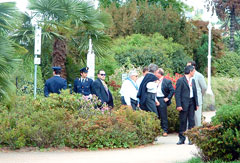 Bilderberg Club meets at the place of the powerful
in Athens
Bilderberg Club meets at the place of the powerful
in Athens
http://www.patris.gr/articles/132651
In Greece (in a Vouliagmeni hotel), is currently happening, according to information, the world Congress of secret Club "Bilderberg", which is brought proapofasj'zej for the chances of world, but also this is where Prime Ministers are nominated. It should be stressed, that according to the infamy that circulates round the club Bilderberg, they play for some reason, the role of an 'informal world government'.
Some say indeed, that anything important that has happened in the planet the last 51 years, has first been discussed and organised in her meetings.
The Club, meets for four days each year in different cities, countries and 120 politicians, businessmen, journalists only from the 30 until 35 selected NATO countries participate.
Participants are prohibited to speak to the press or to anyone else and anything they learn there they are not allowed to mention where they heard it. Further, they even go as far as to deny that they were there.
It is prohibited for them to tell their home Parliaments of their countries, if they are politicians, too.
Big Greek interests are there in the list of persons that participates in the meetings of the club in question. According to information, in the meetings of club "Bilderberg" from 1988 up to 2007 have participated Kostas Karamanli's, Giorgos Alogoskoy'fis, the Nto'ra Mpakogja'nni, the Ste'fanos Ma'nos, Giorgos Papandre'oy, Theodoros Pa'gkalos and Anna Djamantopoy'loy.
The only Greek journalist that has taken part in the meetings of club, is Alexis Papahela's. In the meetings at the same time, they appear to participate the General Director of Coca - Cola, Giorgos Dayj'd and the professor of university Athens Loukas Tsoykala's and two shipowners.
Babel Fish Translation
http://babelfish.altavista.com/
At 1.30 am on Wednesday 9th April 2008 a caller pretending to be Ex Home Secretary and MP for Airdrie and Shotts, John Reid phoned my mobile apparently from New York. In character with Reid's thuggish Rory Bremner persona he was making a thinly veiled threat against me and my Bilderberg website which ironically this year may have failed for the first time to discover the Bilderberg meeting venue.
Apr 24th 2008 - From The Economist
John Paulson, power personified
WHO rules the world? The most familiar answers to this question are so poisoned by paranoia that it is tempting to dismiss the question itself. If the Jews are so powerful, then why have they had such a dreadful time of things? If the men and women of Davos are so mighty, then why do they keep messing everything up?
Yet the fact that so many people give foolish answers to a question does not discredit the question. The rise of nation states produced national ruling classes. It would be odd if the current integration of the world economy did not produce new global elites—business people and financiers who run global companies and global politicians who steer supra-national organisations such as the European Union (EU) and the International Monetary Fund.
David Rothkopf, a visiting scholar at the Carnegie Endowment for International Peace, argues that these elites constitute nothing less than a new global “superclass”. They have all the clubby characteristics of the old national ruling classes, but with the vital difference that they operate on the global stage, far from mere national electorates.
They attend the same universities (Mr Rothkopf calculates that Harvard, Stanford and the University of Chicago are now the world's top three superclass producers). They are groomed in a handful of world-spanning institutions such as Goldman Sachs. They belong to the same clubs—the Council on Foreign Relations in New York is a particular favourite—and sit on each other's boards of directors. Many of them shuttle between the public and private sectors. They meet at global events such as the World Economic Forum at Davos and the Trilateral Commission or—for the crème de la crème—the Bilderberg meetings or the Bohemian Grove seminars that take place every July in California.
Mr Rothkopf makes a fascinating tour of the world of the superclass. He opens the door to the office of the head of Goldman Sachs, Lloyd Blankfein, on the top floor of Goldman's tower on New York's Broad Street. He visits the factory that customises Gulfstream jets (every year nearly 10% of Gulfstream's clients attend Davos). He calls on the Carlyle Group where financiers and former presidents get together to make each other richer. And he offers a tour of the weird proceedings of the Bohemian Grove meetings, which Richard Nixon described as “the most faggy goddamned thing you could ever imagine.”
“Superclass” is such a wide-ranging book that it inevitably also raises quibbles. Mr Rothkopf never quite defines the boundaries of his subject. Is he talking about the super-rich? Or about the super-influential? Do the people he talks about really constitute a “class”? Or are they an agglomeration of competing elites with different agendas? Mr Rothkopf adds to the confusion by chasing all manner of hares, including the rise of internet-enabled jihadists.
Mr Rothkopf, whose CV includes a spell working for Kissinger Associates and a period as the deputy under-secretary of commerce for international trade, is much better informed about America than he is about the rest of the world. He is fascinating on the revolving door between the Pentagon and the arms industry, for example, but he says next to nothing about the rise of the EU, one of the great building blocks of the trans-national world. His exposition of the wonders of Davos is more breathless than illuminating.
Still, none of this should put off potential readers: “Superclass” is a pioneering study of a subject that has often been the preserve of conspiracy theorists. Mr Rothkopf is anything but a crank, and he is right when he says that, these days, the most influential people around the world are also the most global people.
He is also admirably ambivalent about his subject. He worries about surging inequality—the richest 1% of humans own 40% of the planet's wealth—and about the rumbling backlash against so much unaccountable power. But he points out that, in a world where most global institutions are lumbering and antiquated, members of the superclass have repeatedly stepped in to put the global system to rights. Let us hope that they have not lost their touch.